


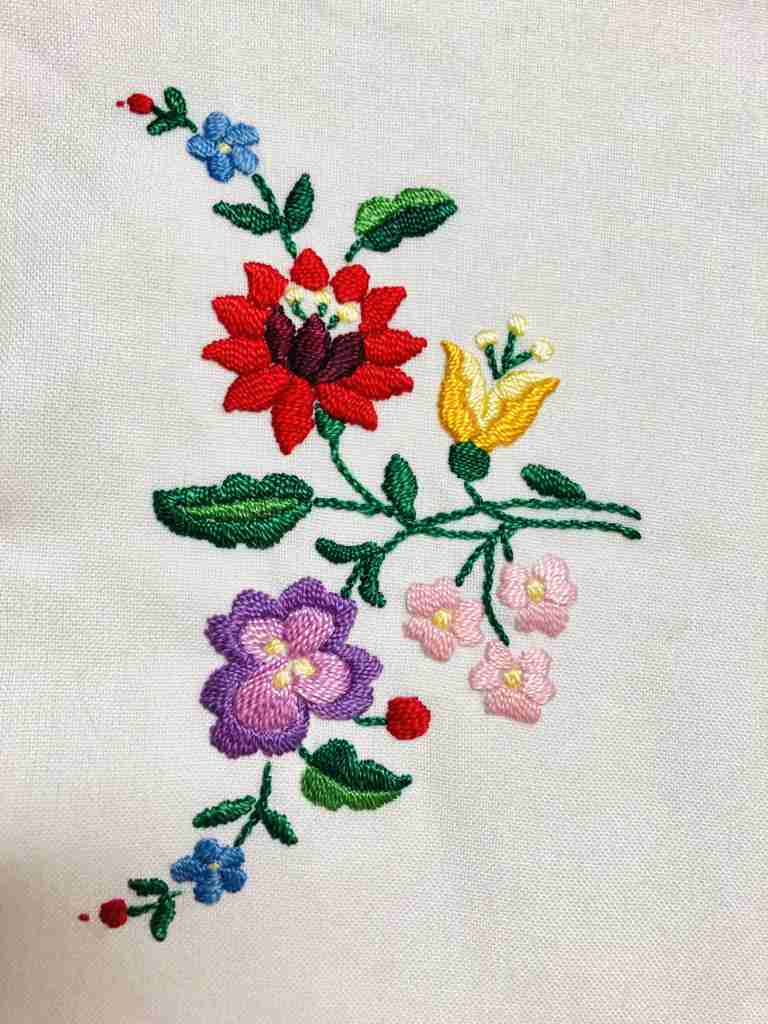
Hungarian Embroidery
Hungarian embroidery is a traditional embroidery style from Hungary, with striking colours, floral motifs and decorative patterns. The style is often associated with folk art and richly embellished textiles.
Definition
Hungarian embroidery is a collective term for traditional embroidery styles from Hungary. Many regional styles are recognisable by bright colours, floral motifs, leaves, tendrils and rhythmic repetition. It is not one fixed stitch or a single uniform pattern. The drawing, filling and colouring vary by region and tradition, but the result often has a lively, decorative folk-art character.
When to use it
Use this style as inspiration for a floral border on clothing, a cushion, a bag or a folkloric wall hanging. It suits motifs that can be symmetrical or richly filled. You can give it a more modern feel by repeating one flower shape in a limited palette on calm, plain fabric.
Common mistakes
A common mistake is treating all Hungarian patterns as identical. Allow for regional differences and name a specific tradition only when your source or pattern genuinely identifies it. Too many colours without a clear distribution can make a motif look busy; decide beforehand which colour will provide the outline, filling and accents.
Practical tips
Sketch the motif lightly on the fabric and begin with the large flower shapes. Stitch outlines first if they help you retain the shape, then fill the areas. Make a test with three colours to see whether the contrast is strong enough on your chosen ground.
