


Wrapped Running Stitch
The wrapped running stitch is a variation on running stitch in which you wind a second thread around the base stitches. This creates a decorative, wavy line without piercing the fabric again.
Hoe maak je deze steek?
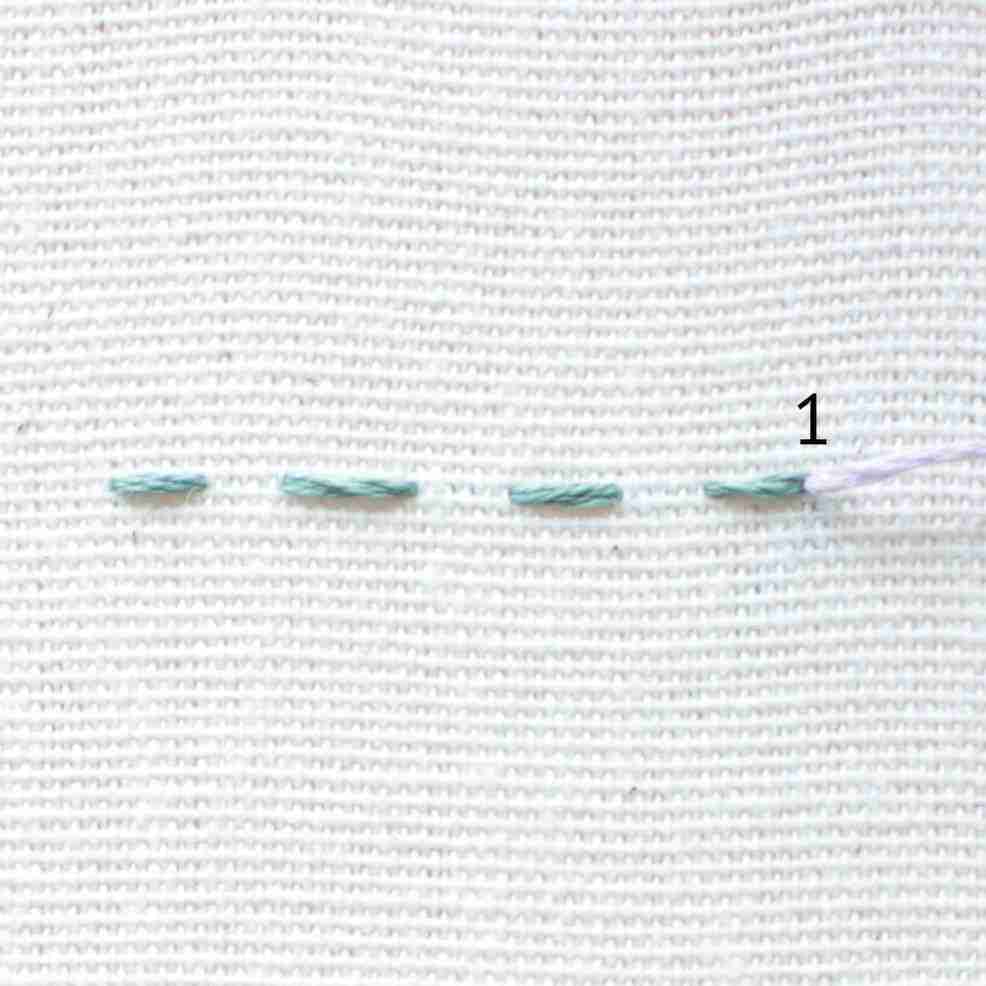 1
First make a row of running stitches.
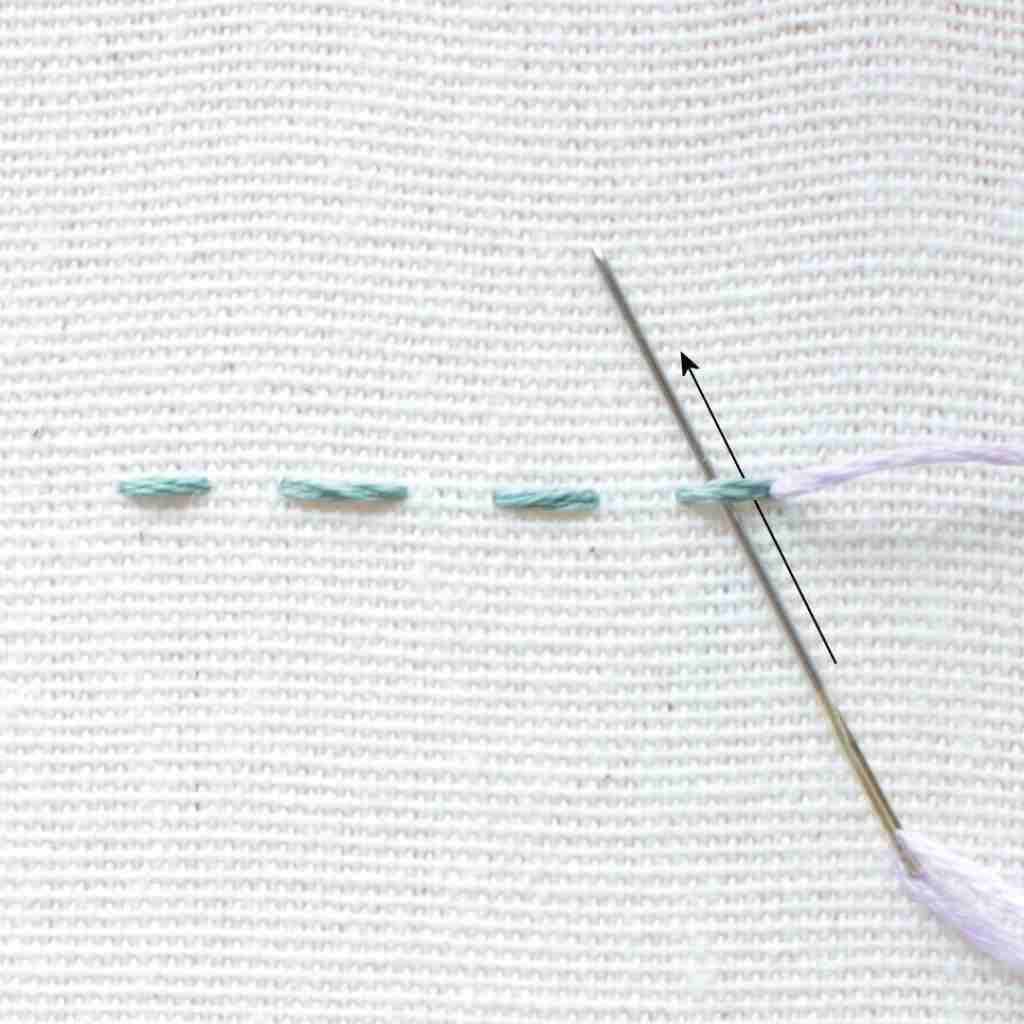 2
Thread your weft thread through a blunt, sturdy needle. A tapestry needle is a good option for this. A needle that is too sharp can make your stitches fray!
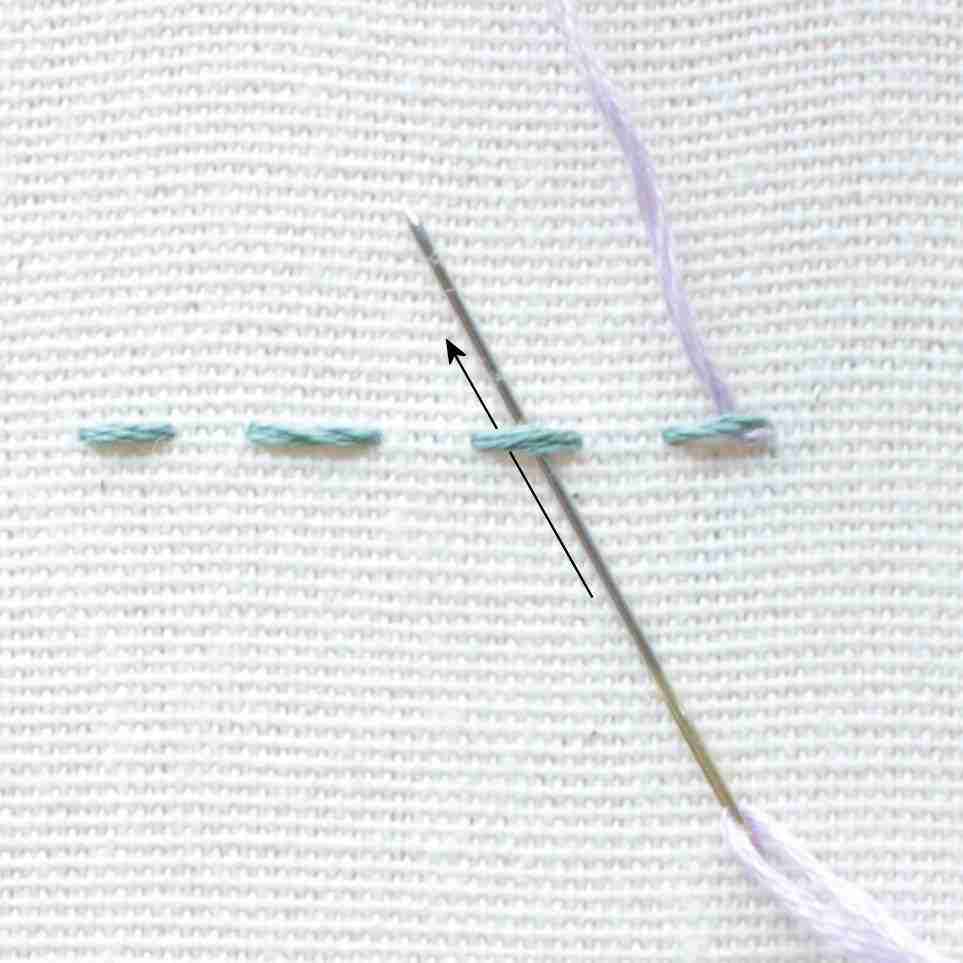 3
Then bring the needle up from behind through the first hole of your first running stitch.
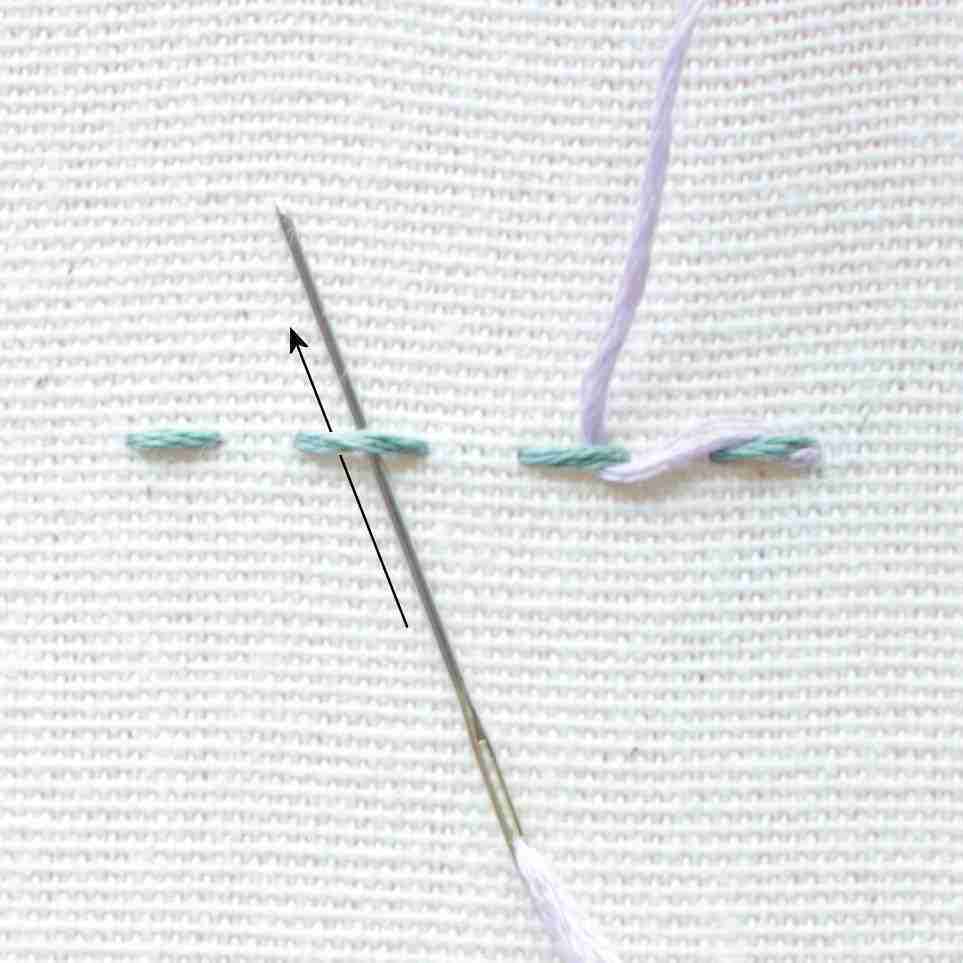 4
Then pass the needle from the left or right underneath the first stitch. Continue stitching consistently from the chosen side, left or right.
- 5
Now pass the needle underneath the second stitch, then underneath the third, fourth and so on.
- 6
Repeat the last two steps until you have whipped the entire row of running stitches.
⚠ Common mistakes
- Make the first row of running stitches even, as it forms the foundation.
- When whipping, do not pierce the fabric unless necessary.
- Do not pull the second thread too tightly, or the row will become distorted.
Definition
The whipped running stitch consists of a base of short running stitches and a second thread guided around those stitches. The extra thread passes alternately underneath or alongside the base without piercing the fabric. This turns a simple broken line into a wavy, interlaced pattern. The stitch is light and decorative, but remains simpler to make than many heavier braided or woven line stitches.
When to use it
Use this stitch for decorative lines, borders, flower stems, frames and playful details on a card or garment. It also suits a small piece of embroidery where you want to give a calm base line a little more character. A second colour makes the wave clearly visible, while the same colour creates a soft relief. The technique is easiest to learn on straight or gently curved lines.
Practical tips
First embroider the complete base line, then use a blunt needle for the whipping. Guide the second thread under the stitches in the same way each time if you want an even wave. Make a test piece with different stitch lengths; a short rhythm looks very different from a more open row. Work in a hoop and lay the fabric flat occasionally to check that everything remains relaxed.
