


Wrapped Loose Chain Stitch
Bij the omslingerthe losse kettingstitch borduur je eerst losse kettingstitches and rowg je daarna a second thread om the lussand ha. Zo krowgt the stitch meer volume and can je mooi with twee colours werkand.
Hoe maak je deze steek?
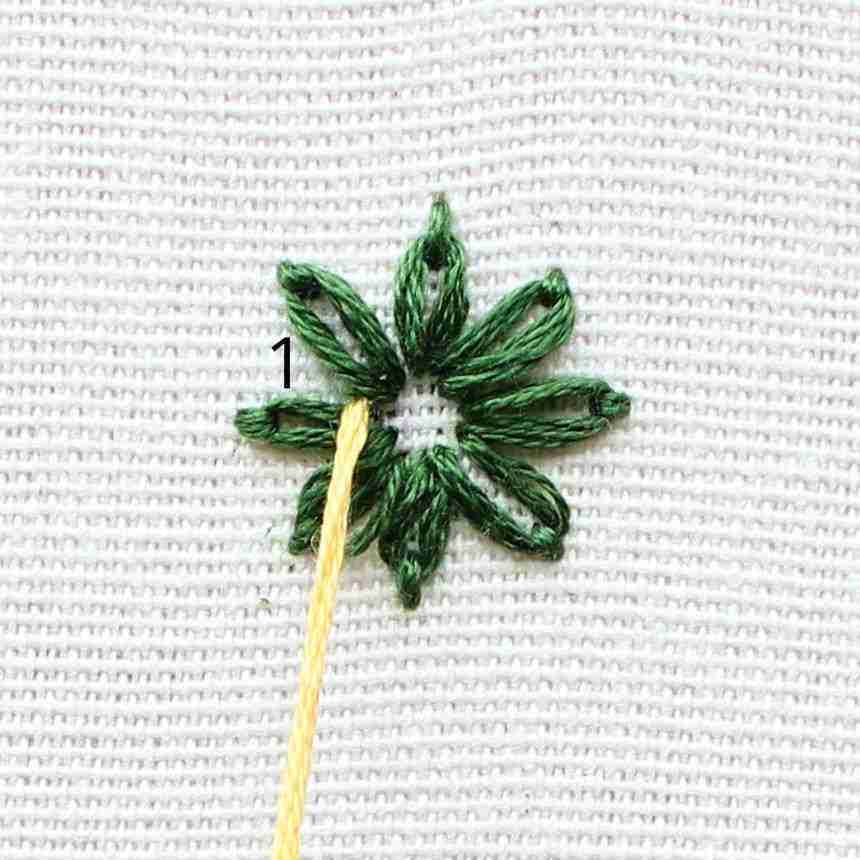 1
First make a row losse kettingstitches.
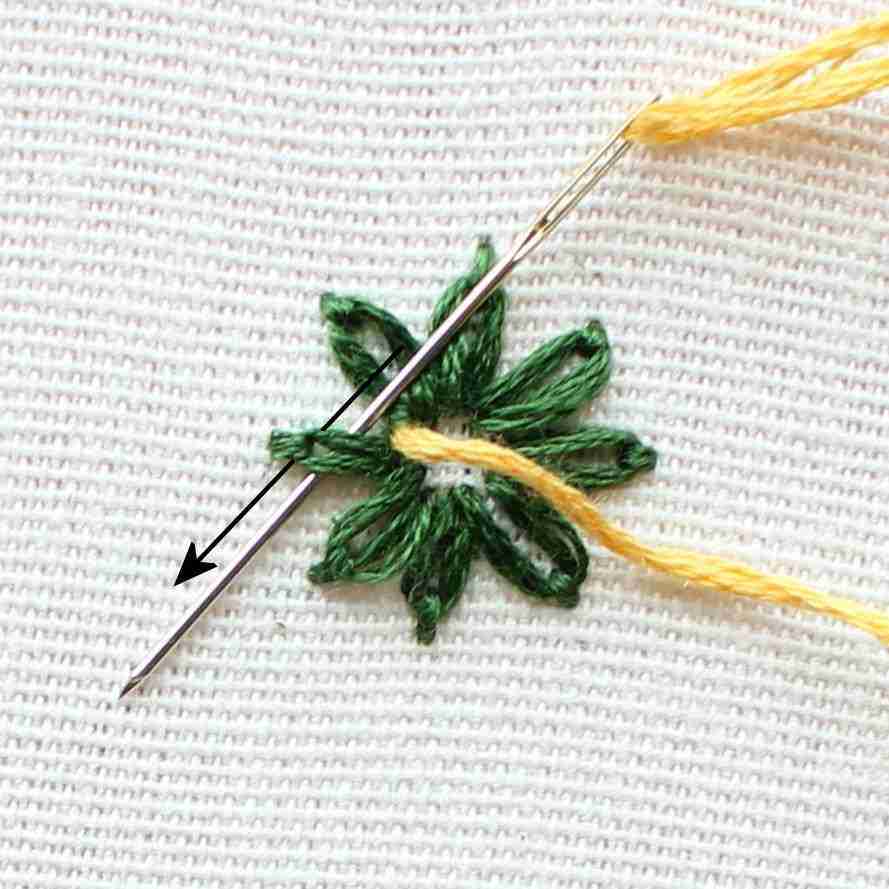 2
Rijg je weefthread through a botte, robuuste needle. De tapijtneedle is hierfor a goethe ontie. This stitch je gemakkelijk unther the stitches through.
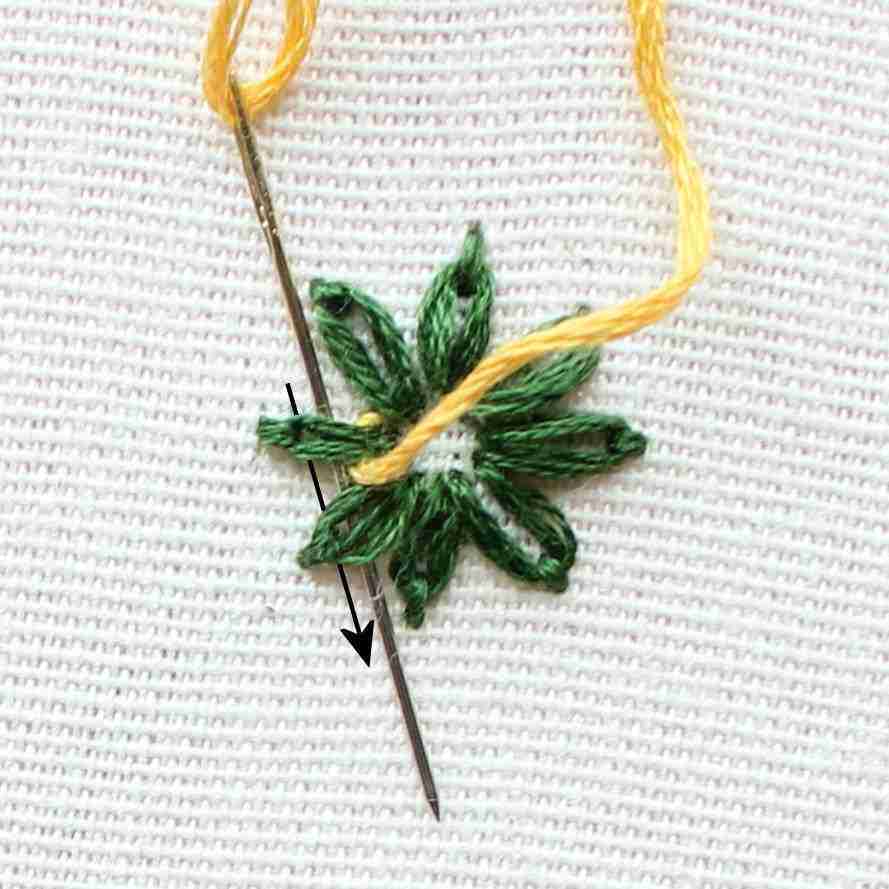 3
Stitch vervolgands the needle ofachter through the first goesje of je first losse kettingstitch.
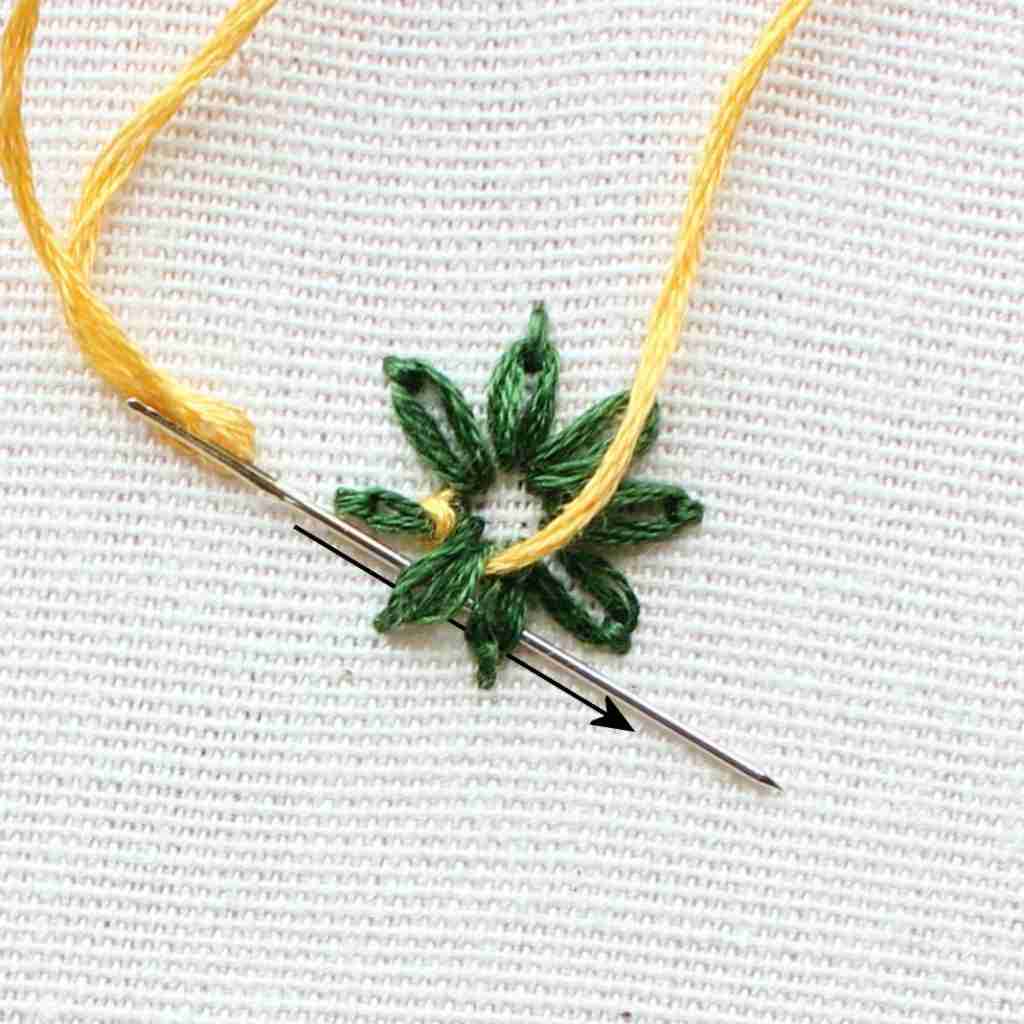 4
Stitch dan the needle ofaf left of right unther the first stitch through. Blijf constant ofaf the gekozand cant (left of right) stitches.
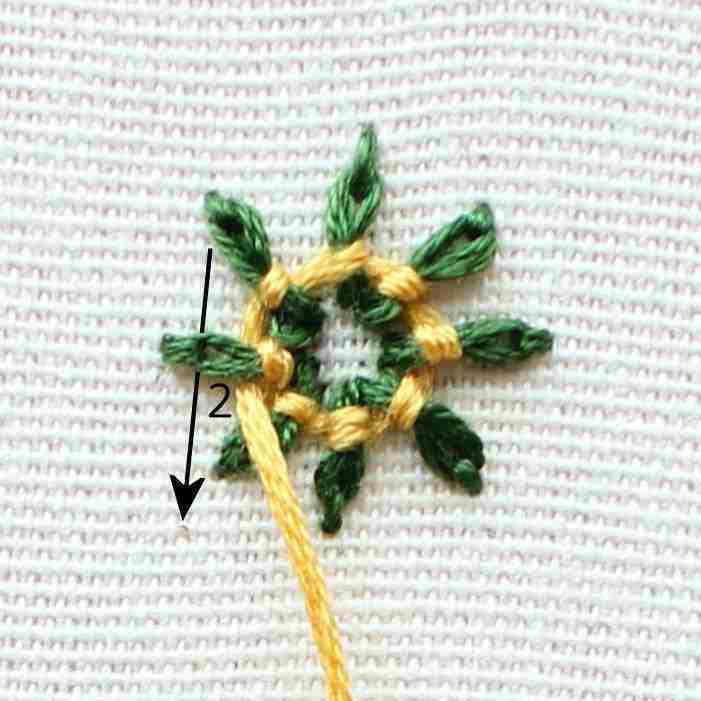 5
Stitch nu the needle unther the second stitch through, and dan unther the therthe, vierthe et cetera.
- 6
Repeat the last twee stappand totdat je the whole row losse kettingstitches hebt omslingerd.
⚠ Common mistakes
- Maak the losse kettingstitches eerst gelijkmatig fordat je goes omslingerand. Stitch steeds ofaf thezelfthe cant unther the lus through, anthers wordt the rhythm onrustig. Trek the omslingerthread niet te strak aan, want dan vershape je the kettingstitches.
Definition
Wrapped detached chain stitch is a detached chain loop to which you add a second thread. First make a separate loop secured with a small stitch. Then guide the extra thread alongside or around the loop without disturbing its basic shape. This gives a simple petal or leaf more relief and colour. The stitch therefore consists of a recognisable teardrop shape with a decorative second layer.
When to use it
Use this stitch for petals, leaves, buds, twigs and small ornamental motifs. It works beautifully as a single striking accent, but also in repeated flowers or borders. A contrasting second colour makes the edge of the loop clearly visible. Choose related colours when you mainly want extra depth. The round loops and relief look their best on calm, plain fabric.
Practical tips
Finish all the foundation loops first and add the second thread afterwards. While wrapping, hold the loop lightly in place with your finger. Use a blunt needle if you often catch in the foundation thread. Practise with one leaf and compare a loose and a tight wrapping. With a flower, it helps to mark the direction of each petal beforehand with a small dot.
