


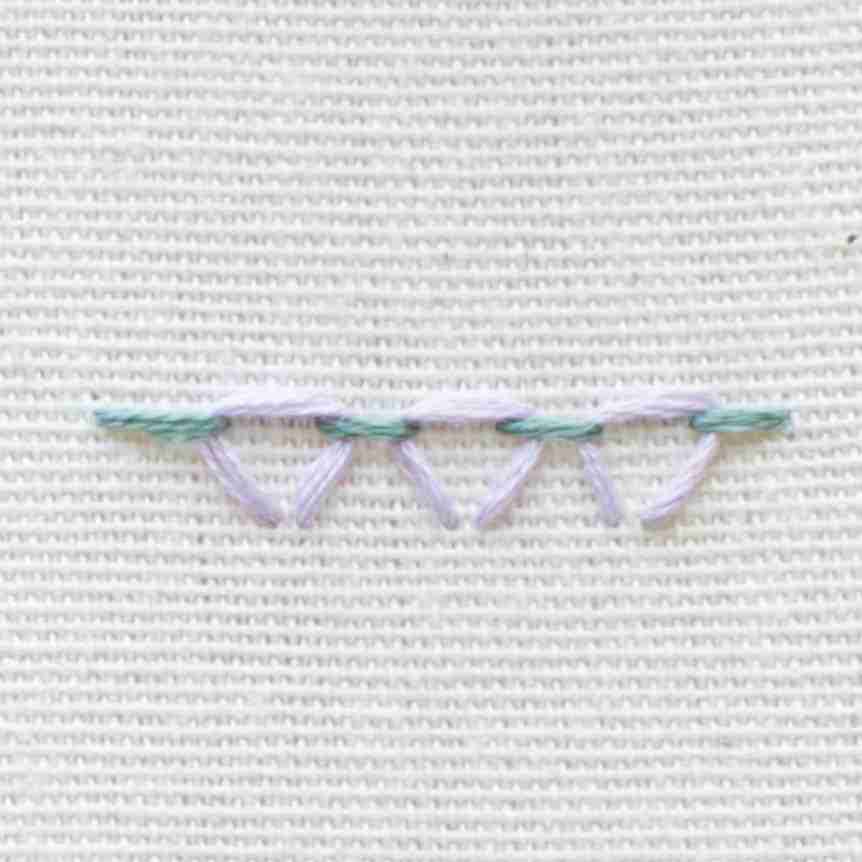
Regal Interlaced Running Stitch
The regal interlaced running stitch is a thecoratieve variant on the rijgstitch waarwith je a extra thread through the basisstitches weeft.
Hoe maak je deze steek?
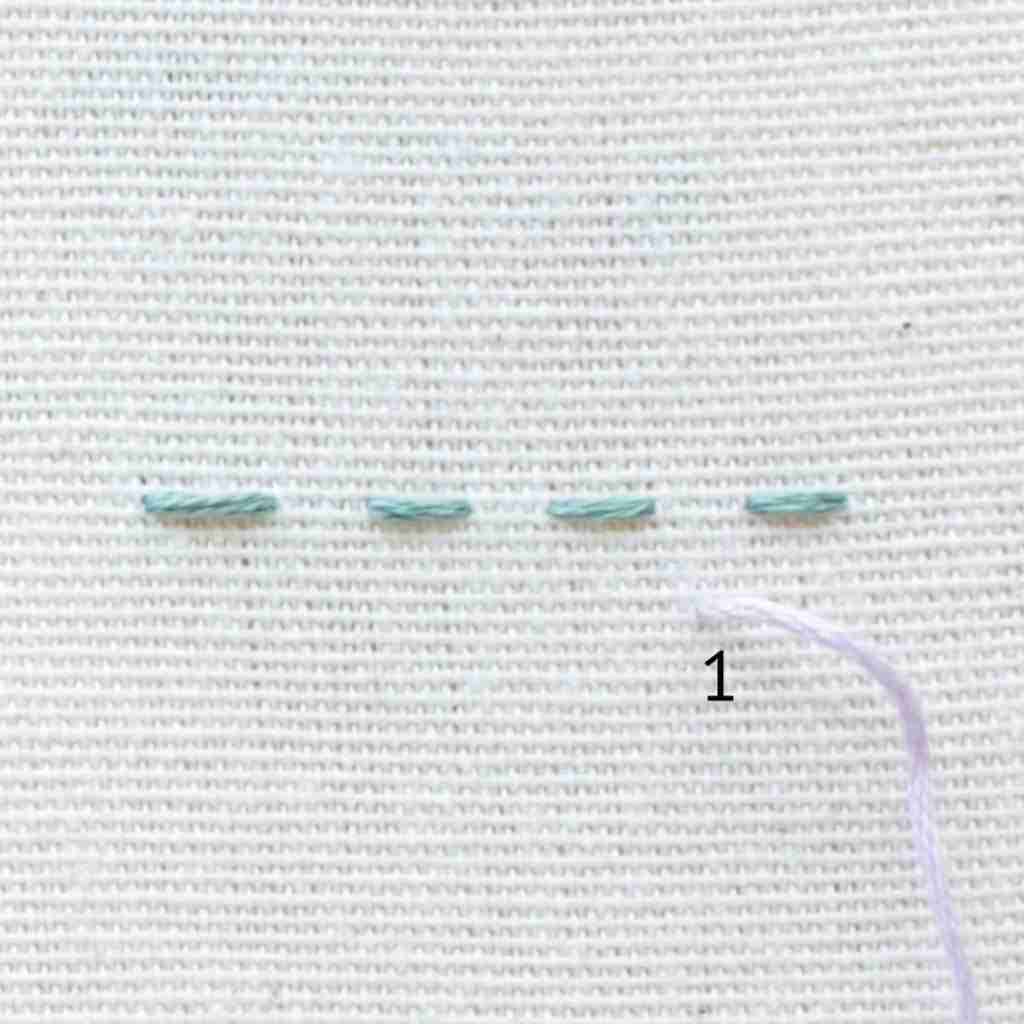 1
Maak eerst a rij rijgstitches.
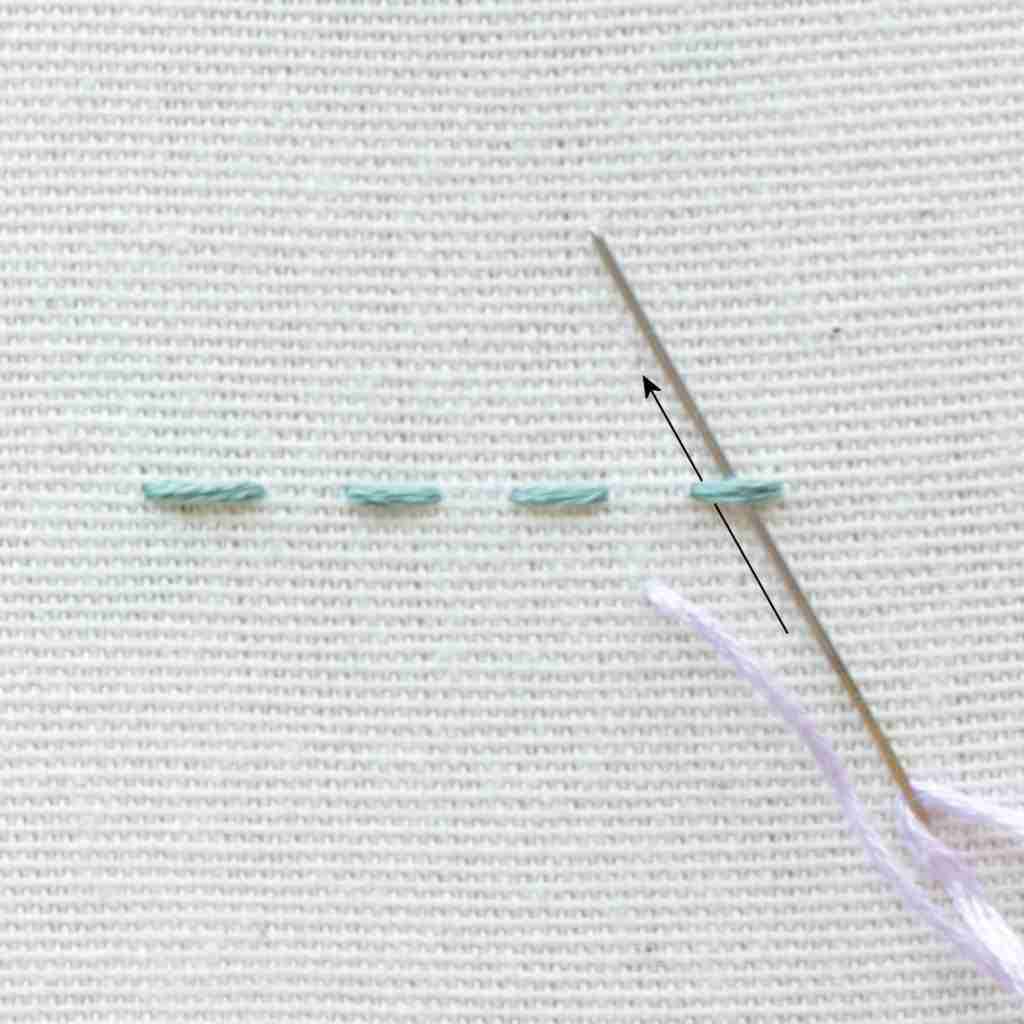 2
Stitch the needle ofunther through the fabric. Dit stitchpunt unther and tussand the first twee rijgstitches.
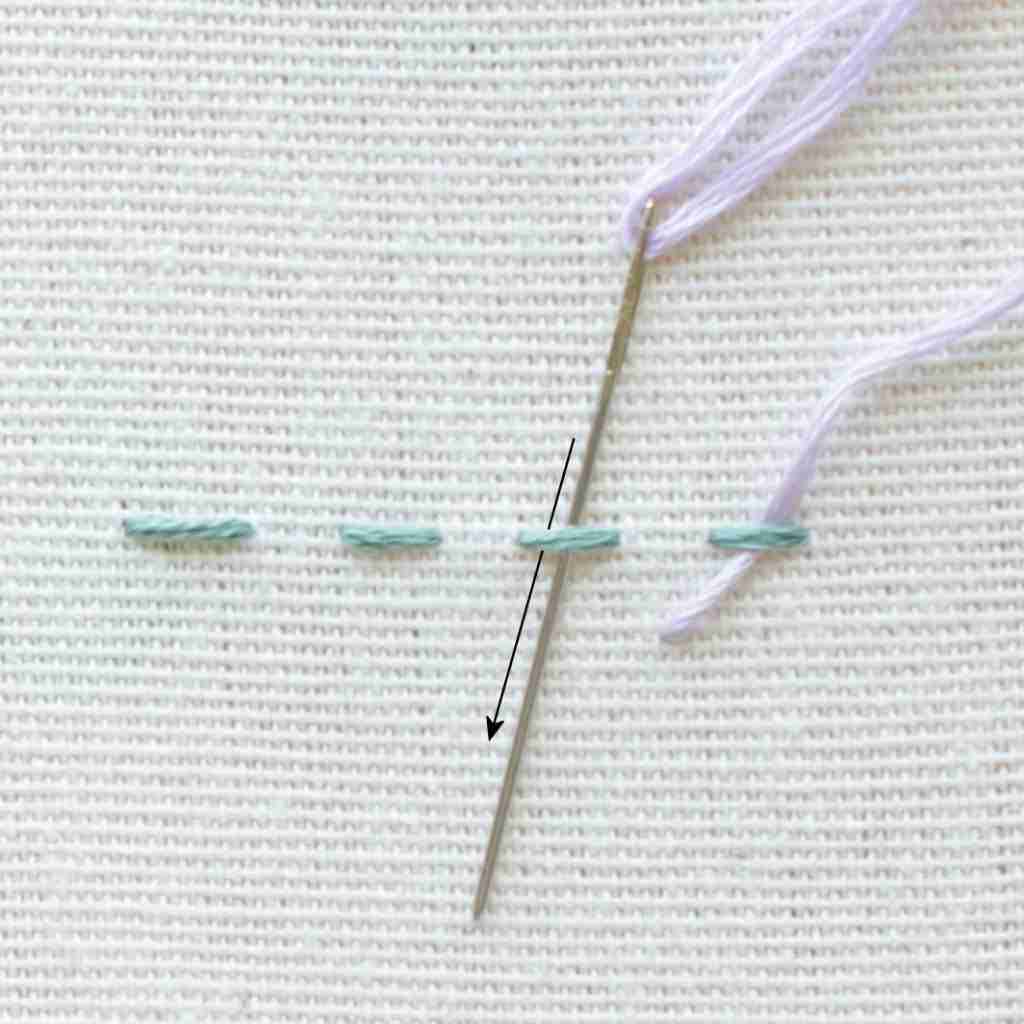 3
Stitch the needle ofaf banthedand unther the first rijgstitch, and ofaf above unther the second.
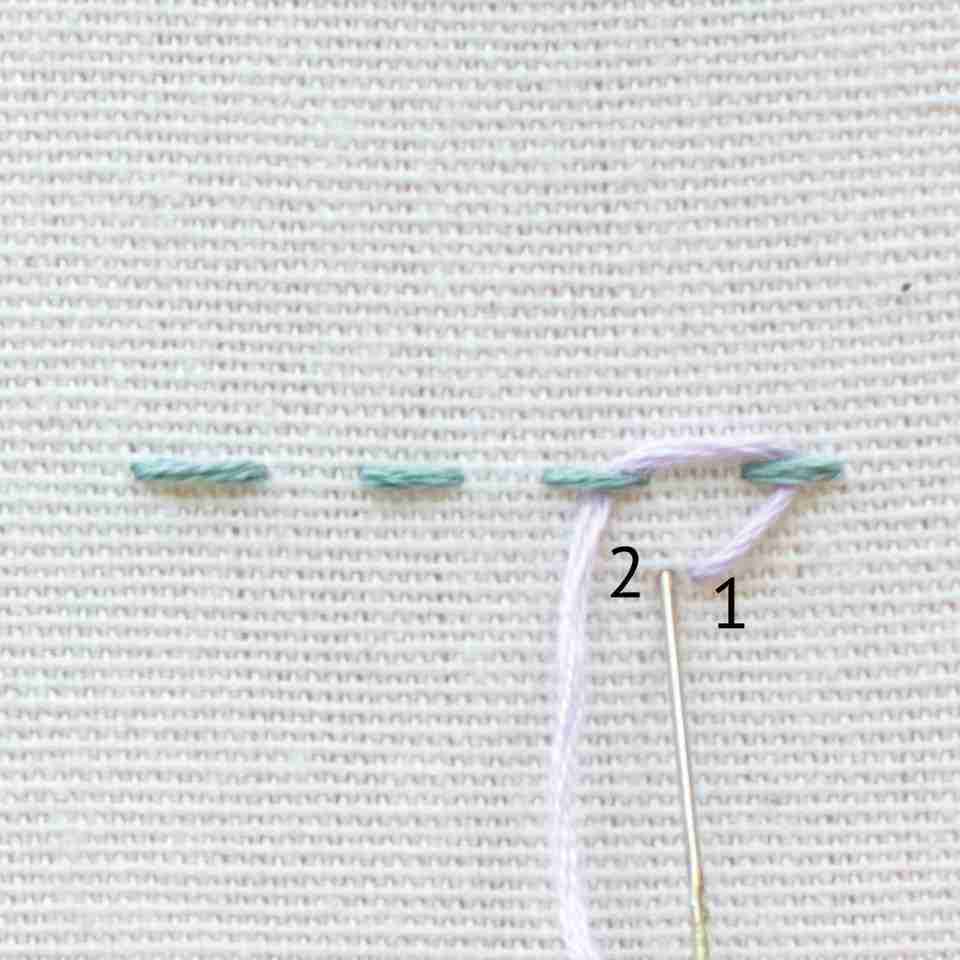 4
Stitch the needle tandslotte through thezelfthe gaatje als the first stitchpunt. Nu heb je a twee rijgstitches throughregand!
- 5
Herhaal the last drie stappand totdat je the gehele rij rijgstitches hebt throughregand.
⚠ Common mistakes
- Volg the weefvolgorthe rustig, anthers raakt the patroon onduithelijk. Trek the thread niet tight aan, want dan verdwijnand the ronthe of druppelachtige vormand.
Definition
Regal laced running stitch is a decorative variation of running stitch. First make a regular foundation line of short stitches. Then guide a second thread through or around that foundation without repeatedly piercing the fabric. This extra thread gives the simple running stitch a richer, raised pattern. The name refers to its elegant appearance, but the foundation remains straightforward: a neat lower line and a relaxed laced thread create the effect together.
When to use it
Use this stitch for elegant borders, sampler work, ornaments, clothing details and lines that deserve more attention than an ordinary running stitch. It works well along a hem, around a decorative frame or as an accent on a small bag or cushion. A second colour makes the laced pattern clearer. Choose two related colours for a subtle finish, or a contrasting colour when the decorative line is meant to stand out.
Practical tips
First make a sample line a few centimetres long, and choose your stitch length afterwards. Embroider the foundation with equal spacing and let the laced thread relax after every few stitches. A blunt needle can help you work under or alongside the foundation stitches without splitting the fibres. Keep the fabric in a hoop when making a long border. After every curve, check that the decorative thread still lies neatly along the outside of the line.
