


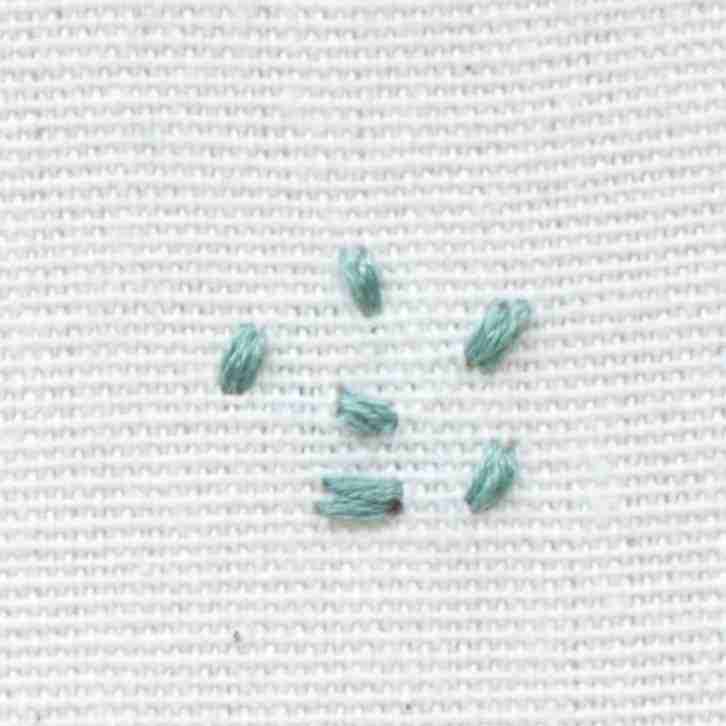
Double Skipped Running Stitch
The double skipped running stitch is a losse running stitchvariant waarbij you korte doublee stitchjes verspreid over the fabric plaatst.
Hoe maak je deze steek?
 1
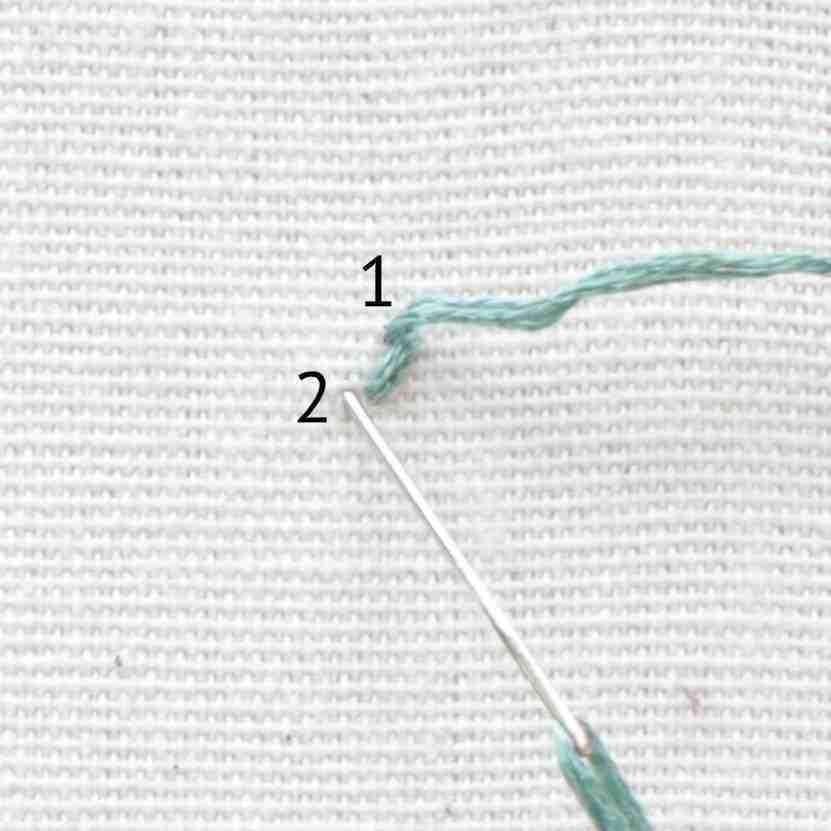
First make several separate running stitches spread across the fabric. This is the single skipped running stitch.
2How do you double it? Simple! Make another running stitch beside the single running stitch, of equal length and in the same direction. Make sure the threads of both stitches lie against each other to create a thicker line.
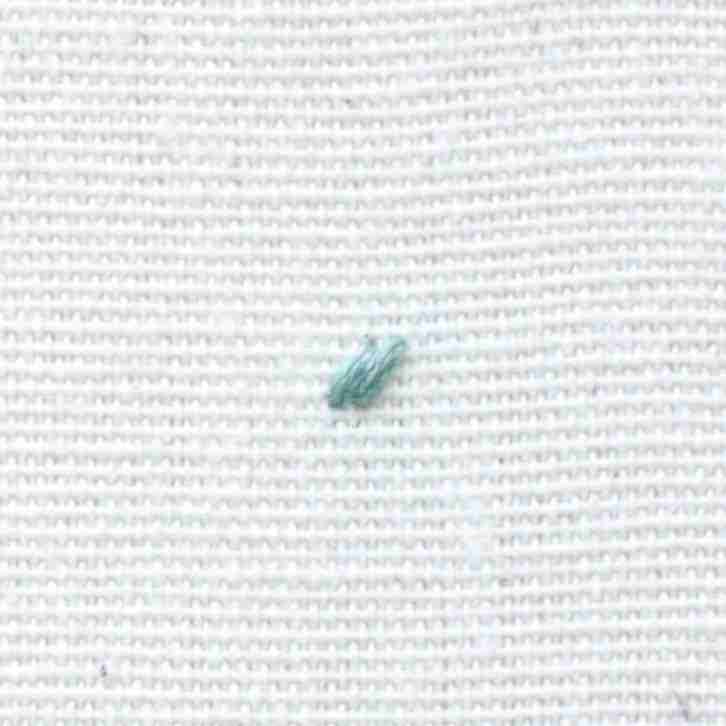 3
The running stitches are all the same length, but you can vary the direction as you wish. This creates the skipped effect.
4Happy with the separate running stitches? You can stop here. If you wish, fill the pattern further by adding running stitches at random.
⚠ Common mistakes
- The doublee stitchjes te ver uit elkaar plaatsen without ritme.
- Beithe stitches not tegen elkaar laten liggen, waardoor the doublee effect verdwijnt.
- Alles exact gelijk maken als juist a natuurlijk verspreid effect gewenst is.
Definition
Double skipped running stitch is not a tight, continuous line but a pattern of short stitches placed in pairs. Each group consists of two small running stitches. You place the next group slightly higher, lower or to one side, creating an irregular but deliberately distributed texture. The staggered placement makes the embroidery look livelier than a neat row with equal spacing.
When to use it
Use this stitch for grass, seeds, sand, snow, bark, grains or a calm background around a motif. It also works as a small accent in a flower centre or as a loose filling in illustrative embroidery. Choose one or two shades from the same colour family for a natural appearance. The loose structure is clearly visible on plain fabric.
Practical tips
Practise on a small section and mentally divide the fabric into separate zones. First embroider a few groups spread across the area, then fill the gaps. Work with short threads so the stitches are not pulled unnecessarily. Look at your work from a distance occasionally; this quickly shows whether the distribution looks natural or whether one area has become too dense.
