


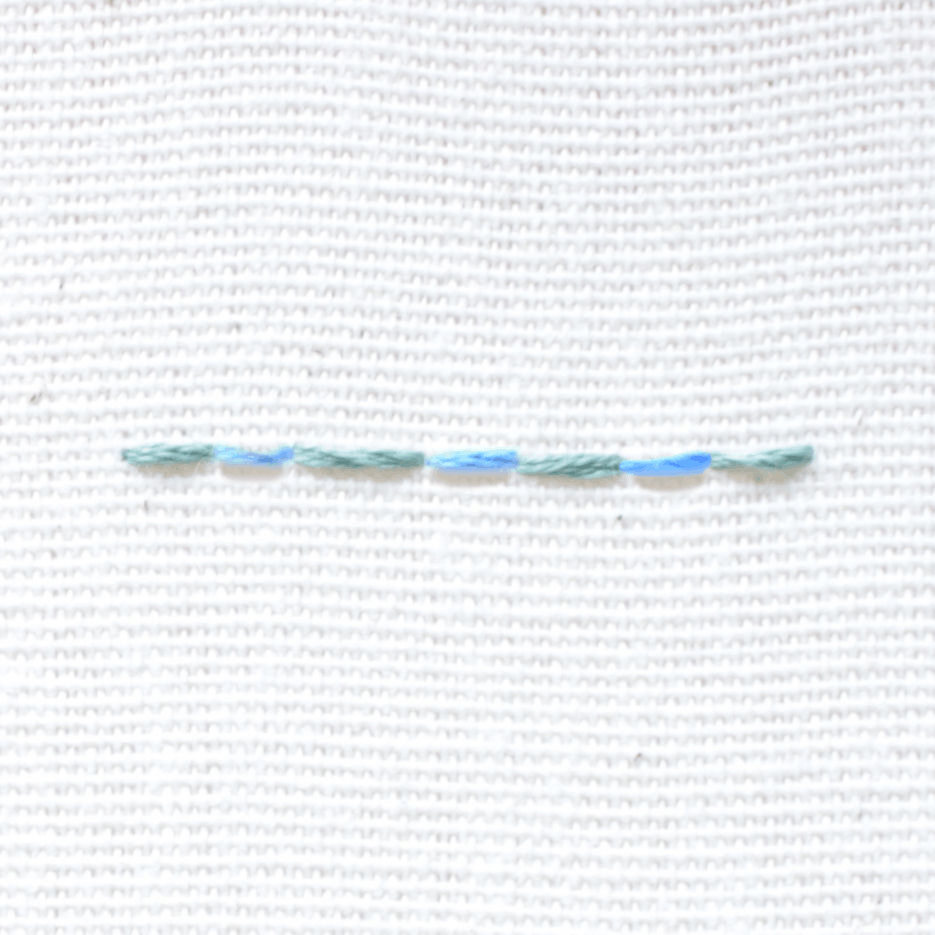
Double Running Stitch
The double running stitch, also known as Holbein stitch, is a running stitch worked in two directions. First you make an open line with gaps, then you fill in the missing sections on the return journey. This creates a continuous line that can be clearly read on both sides of the fabric.
Hoe maak je deze steek?
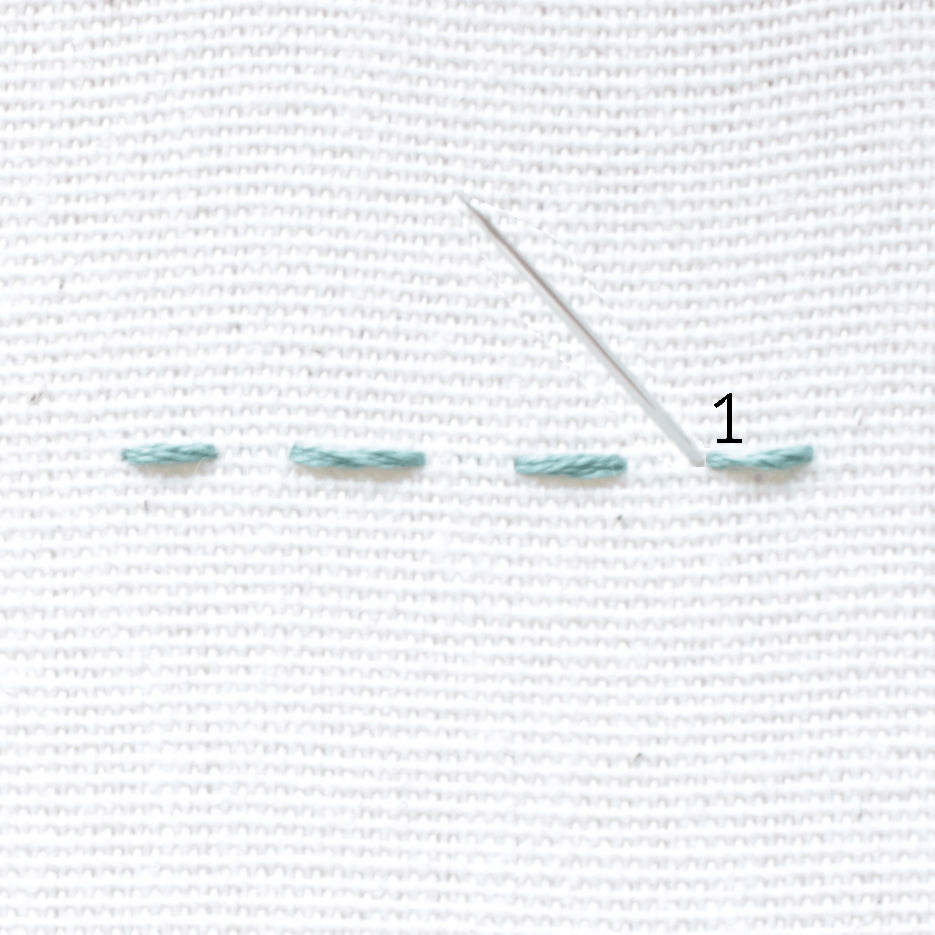 1
Maak eerst een rij rijgsteken.
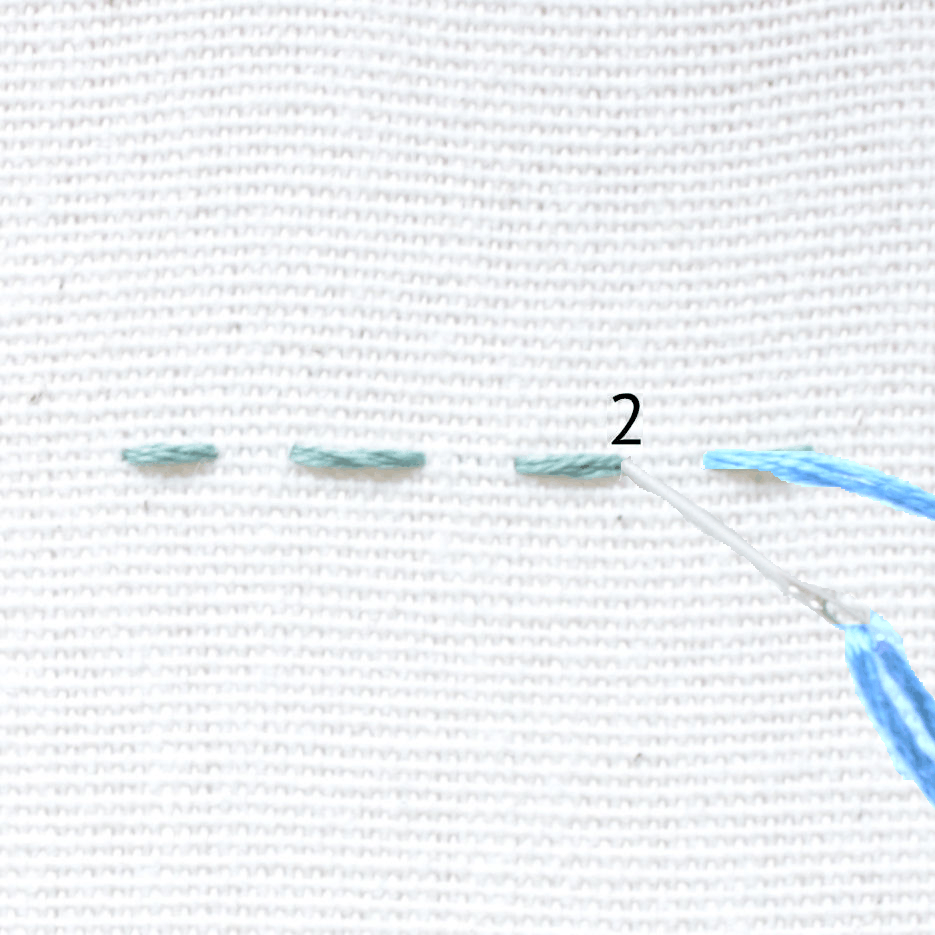 2
Pak nu draad in dezelfde of een andere kleur. Hiermee ga je de ruimte tussen rijgsteken dichten.
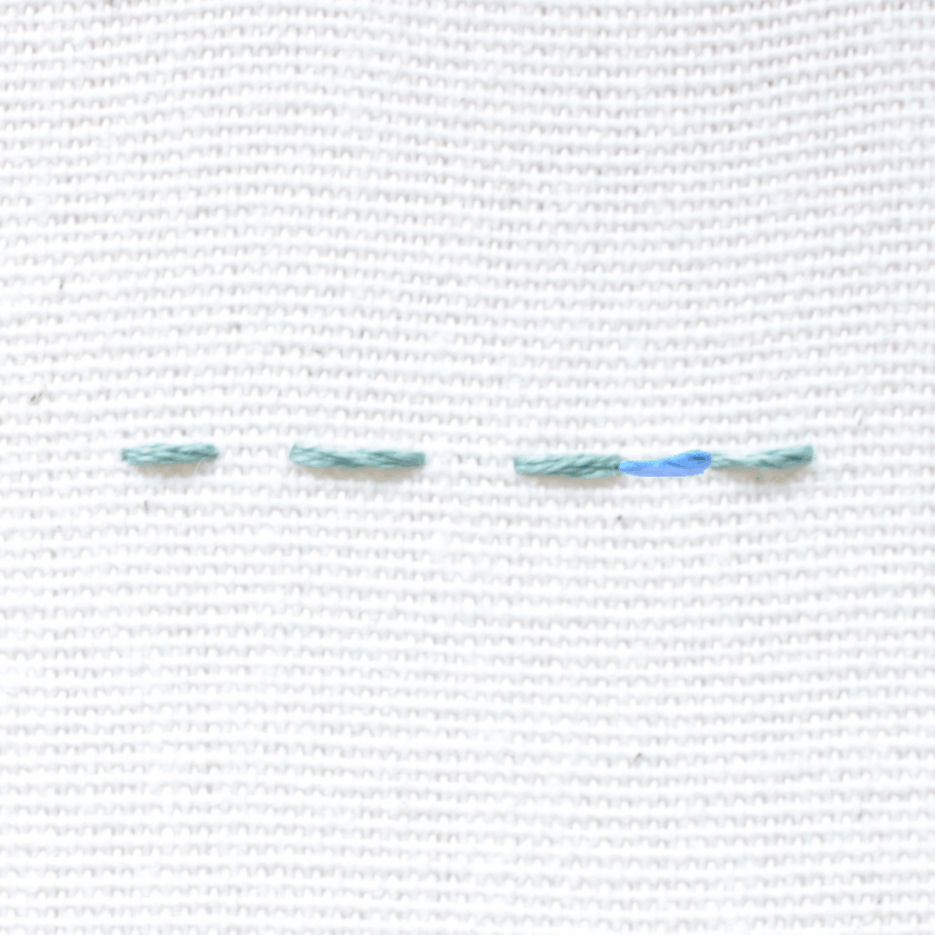 3
Stitch de naald vanonder door het tweede gaatje van de eerste steek.
 4
Vervolgens steek je de naald door het eerste gaatje van de volgende steek.
 5
Herhaal de laatste twee stappen totdat je de gehele rij rijgsteken hebt verbonden.
- 6
Teken vier hulplijnen - A, B, C en D.
- 7
Kom omhoog bij 1 en naar beneden bij 2.
- 8
Ga direct naar beneden en kom omhoog bij 3 en omlaag bij 4.
- 9
Ga zo door op lijnen C en D.
- 10
Ga weer terug omhoog naar lijn A.
- 11
De achterkant en de voorkant zijn nu verschillend.
- 12
Door dezelfde stappen te herhalen worden beide kanten hetzelfde.]
- 13
Kom omhoog bij 5 en naar beneden bij 6.
- 14
etc. etc.
⚠ Common mistakes
- Failing to use the same holes on the return journey, which makes the line untidy.
- Pulling too tightly, which makes the fabric pucker.
- Changing the stitch length as you go; this is especially noticeable in blackwork.
What is double running stitch?
Double running stitch is a clever extension of ordinary running stitch. First embroider a row of loose stitches with equal gaps. Then go back and fill those gaps precisely. The result is an unbroken line that is ideal for graphic patterns.
What is this stitch used for?
Double running stitch is often seen in blackwork, Holbein work, contour lines and fine border motifs. Because the stitch can look neat on both sides of the fabric, it is also useful for work where the back remains visible.
Practical tips
- Count the threads or holes beforehand, especially for geometric patterns.
- Use an even stitch length for a calm line.
- Work the second pass through the same holes as the first.
- Practise on a short straight line before embroidering curves or corners.
What is the difference from running stitch?
Ordinary running stitch leaves open gaps between the stitches. With double running stitch, you fill those gaps on the return journey. This makes the line fuller and neater without immediately using backstitch.
