


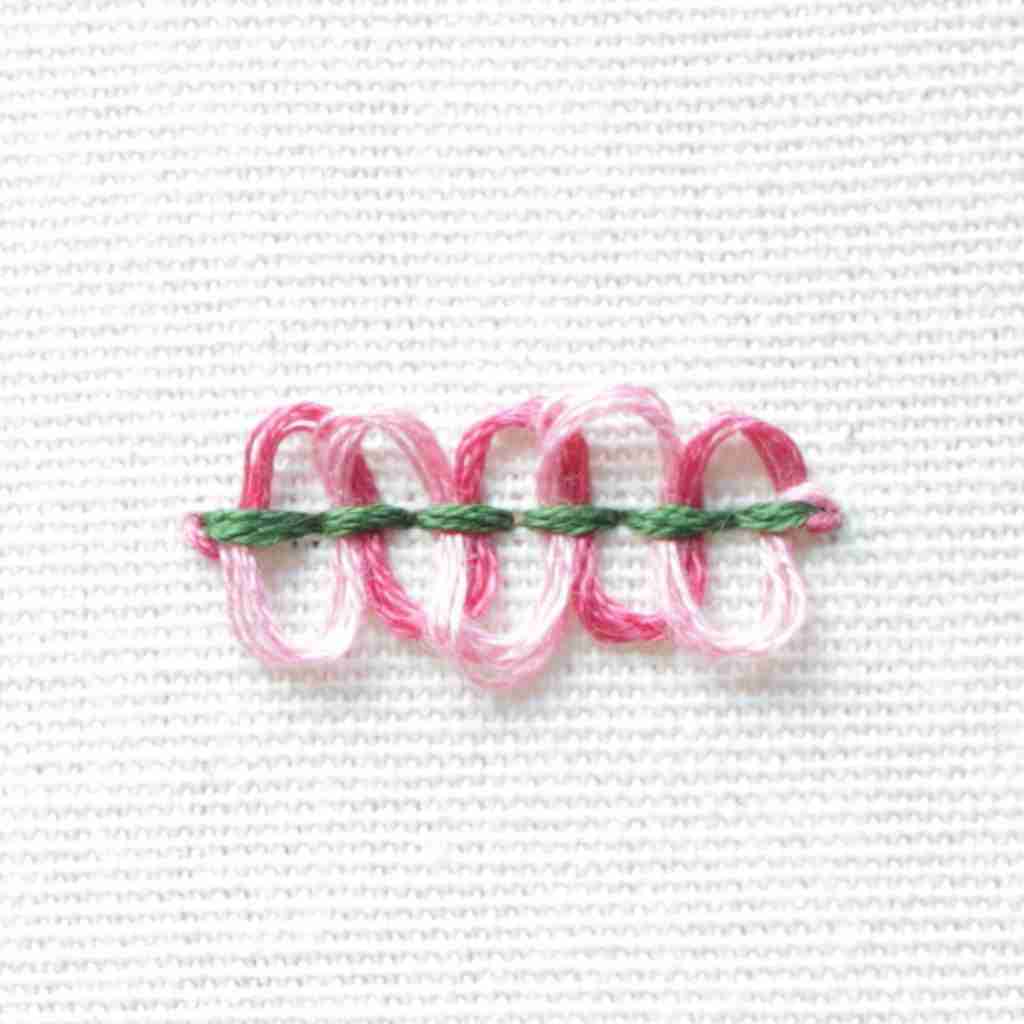
Double Laced Back Stitch
Double laced backstitch is a variation of backstitch in which you weave two additional threads through or alongside the base stitches. This creates a fuller, decorative line with more colour and movement.
Hoe maak je deze steek?
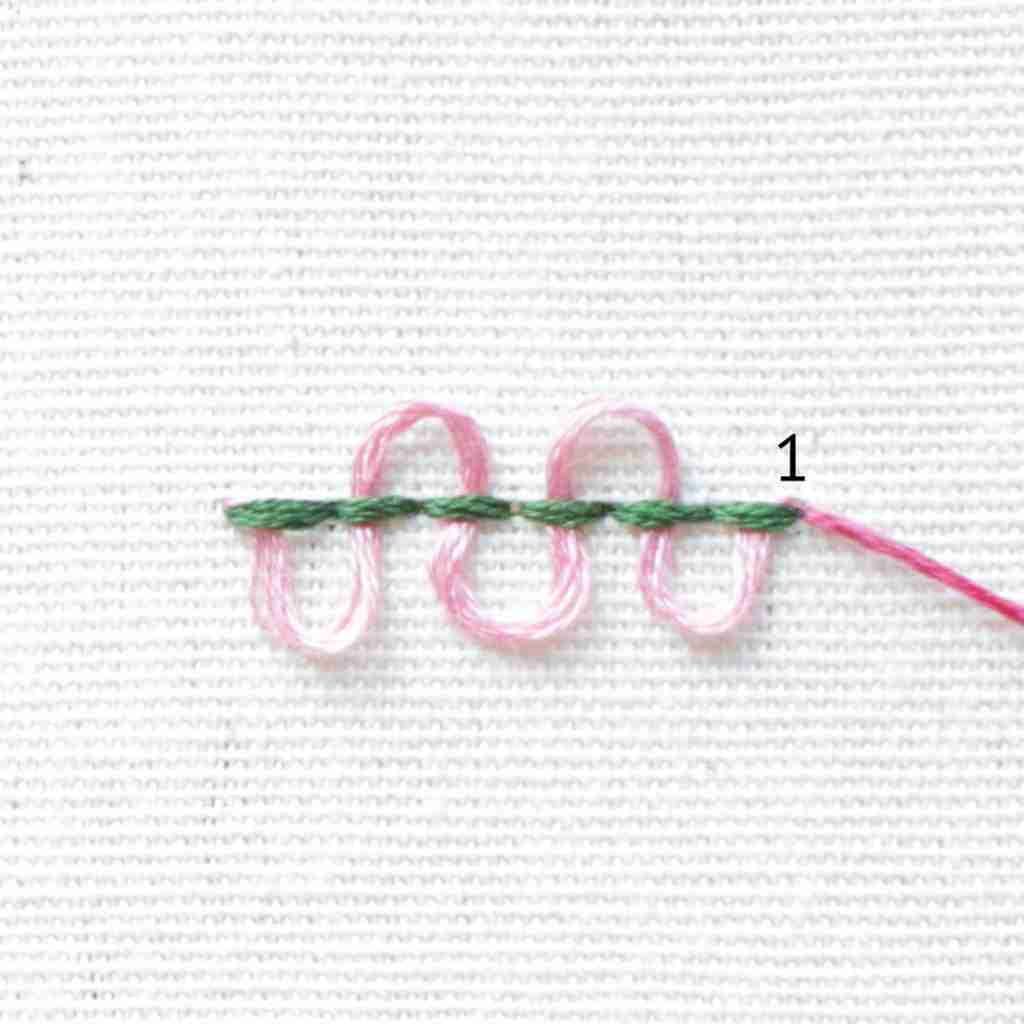 1
First make a row of backstitches.
2Thread your weaving thread through a blunt, sturdy needle. A tapestry needle is a good option for this. A needle that is too sharp can make your stitches fray!
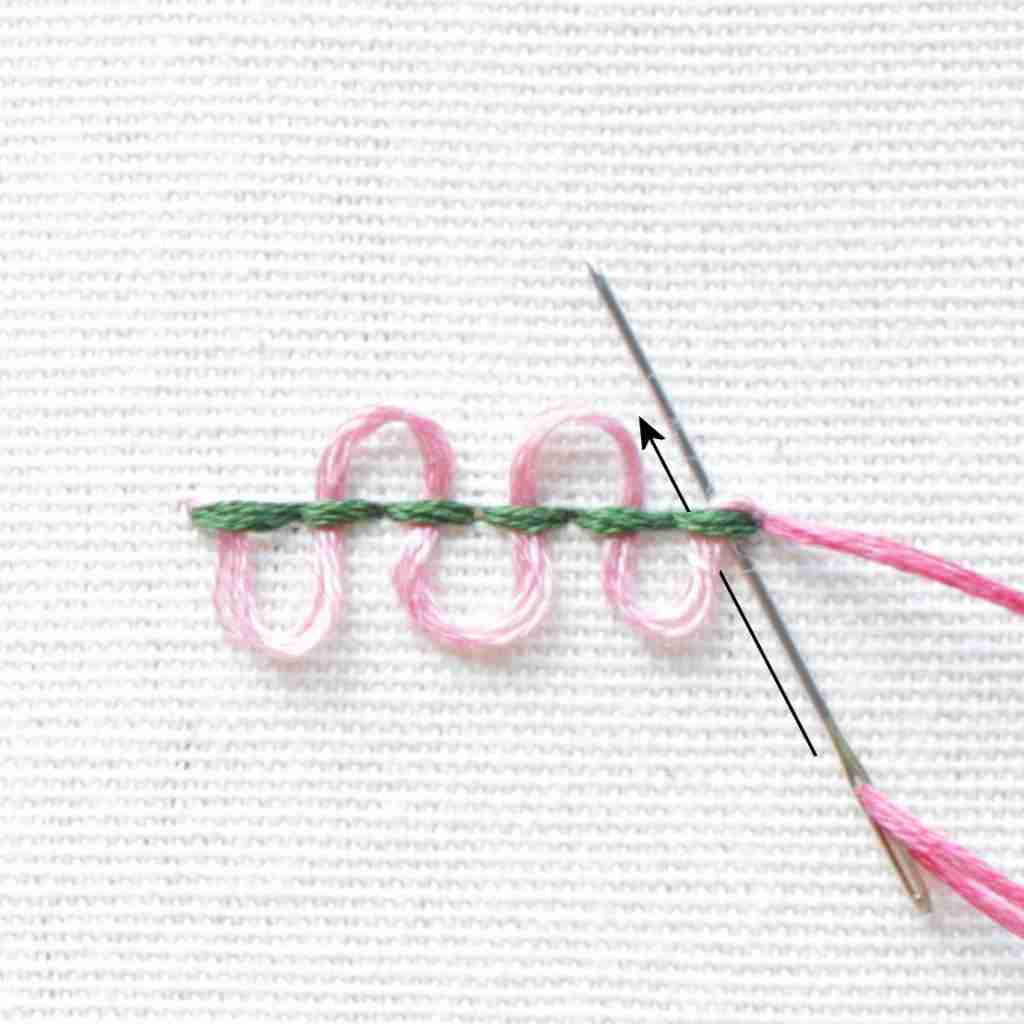 3
Insert the needle through the middle of the first backstitch.
4Then insert the needle from above under the second stitch.
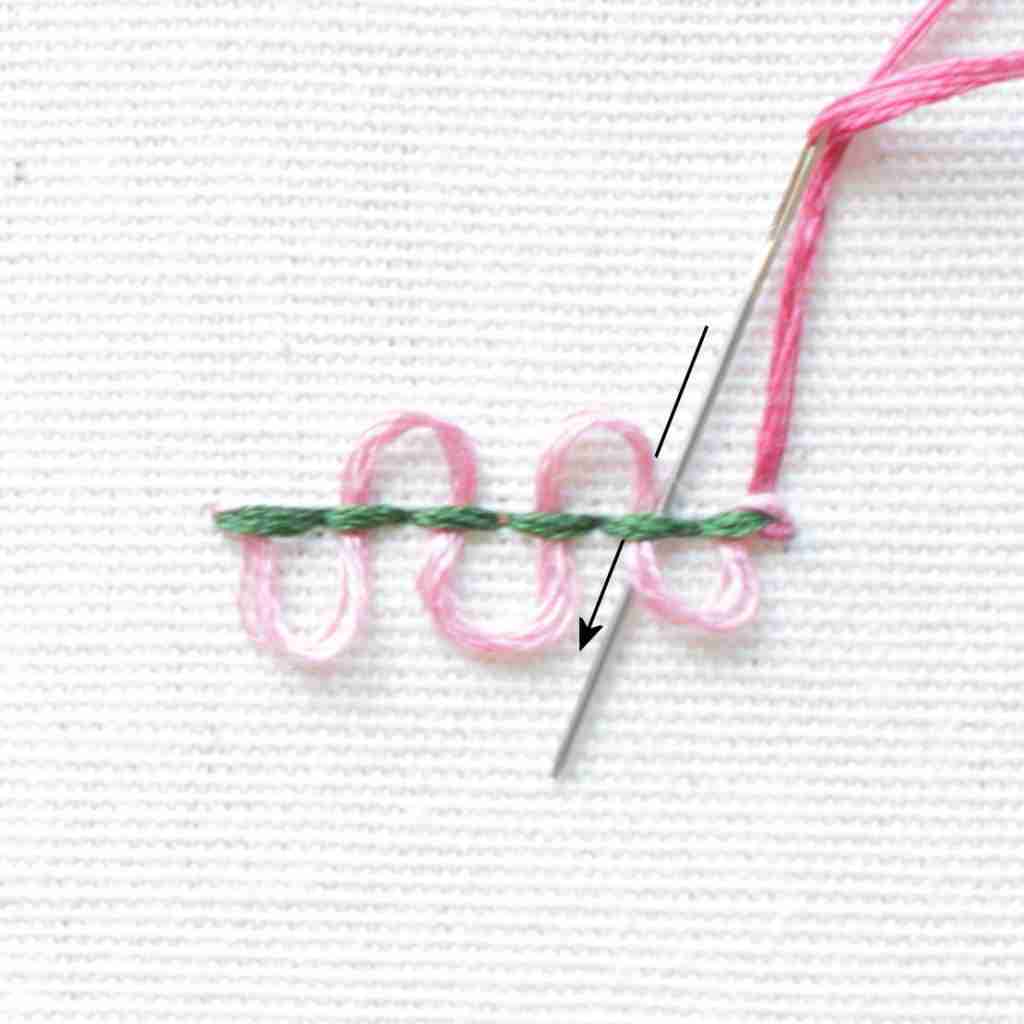 5
Next, insert the needle from below under the third stitch.
6Repeat the last two steps until you have woven through the top of the row of backstitches. Always work in a zigzag pattern, from top to bottom and vice versa.
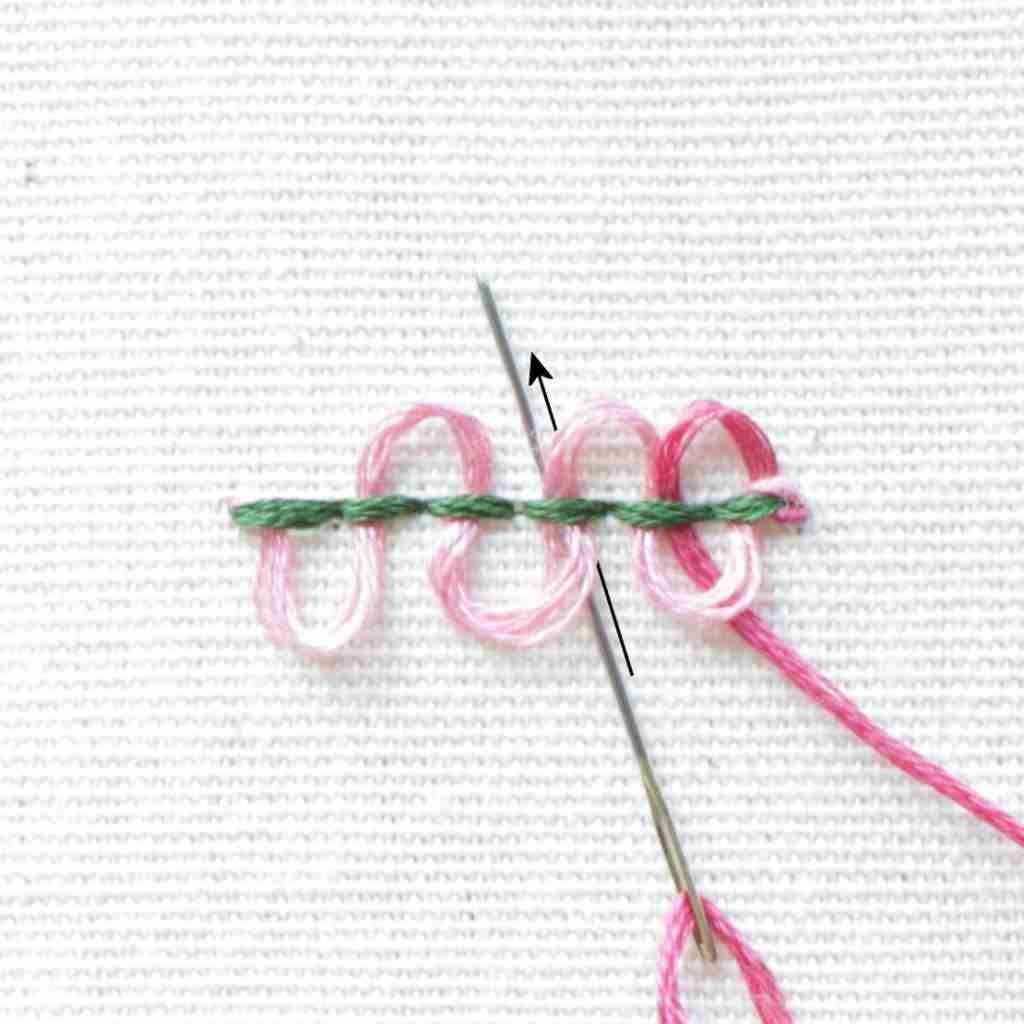 7
Have you reached the end of the row of backstitches? Insert the needle from below under the second stitch.
8Then insert your needle from above under the second stitch.
⚠ Common mistakes
- Making the foundation backstitch uneven, causing both laced threads to run irregularly.
- Pulling the weaving threads too tightly, causing the line to pucker.
- Not weaving the second thread in the same rhythm as the first.
Definition
For the double laced backstitch, first embroider a neat row of backstitches. Then weave two threads through the small openings in that line, passing along above and below the stitches without touching the fabric. The second laced thread follows the same row and fills out the pattern. This turns an ordinary, firm backstitch into a decorative line resembling a narrow braid or cord.
When to use it
Use this stitch for frames, lettering, decorative stripes, stems that should look straight or a border between two fabrics. Its straight foundation makes it suitable for geometric motifs and samplers. A dark foundation with two light laced threads creates strong contrast. For a subtler result, choose three shades that lie close together.
Practical tips
Mark the line if it is longer than a few centimetres and make the backstitches evenly spaced. Use a blunt needle for the laced section and turn the work so you can comfortably work from left to right. Smooth the weaving thread with the needle tip after every five stitches. Fasten the extra threads on the back without drawing the foundation row together.
