


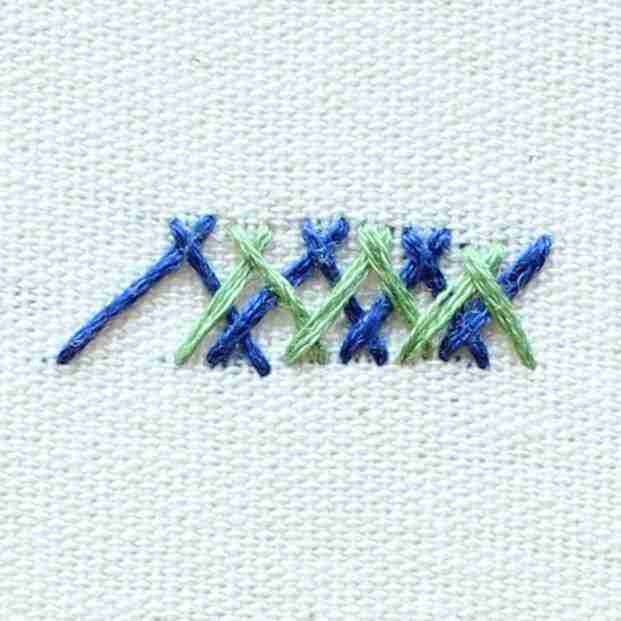
Double Flannel Stitch
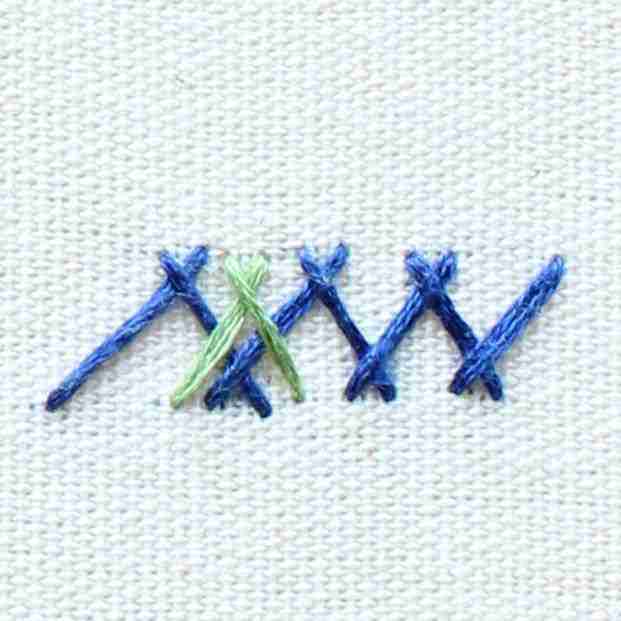
De dubbele flannel stitch is a variant on the flannel stitch waarwith je twee layers over elkaar borduurt. Zo ontstaat a thecorative, kruiselings patroon with meer volume and ritme.
Hoe maak je deze steek?
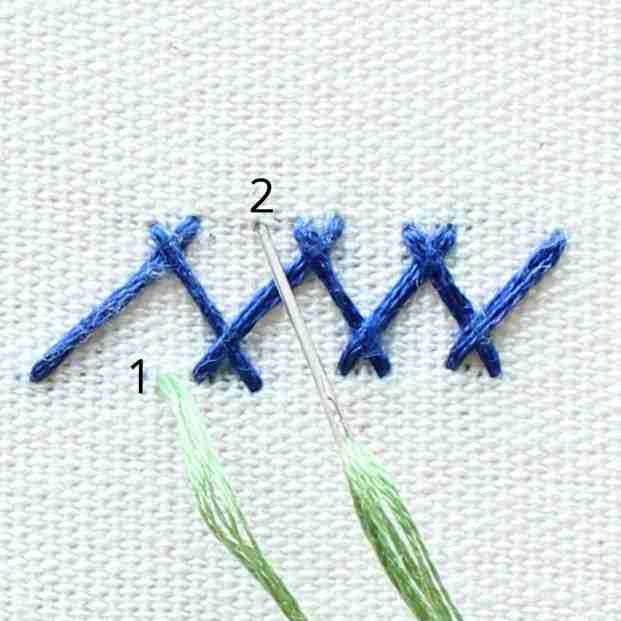 1
Borduur een rij flanelsteken. We noemen de eerste flanelsteek uit deze rij A.
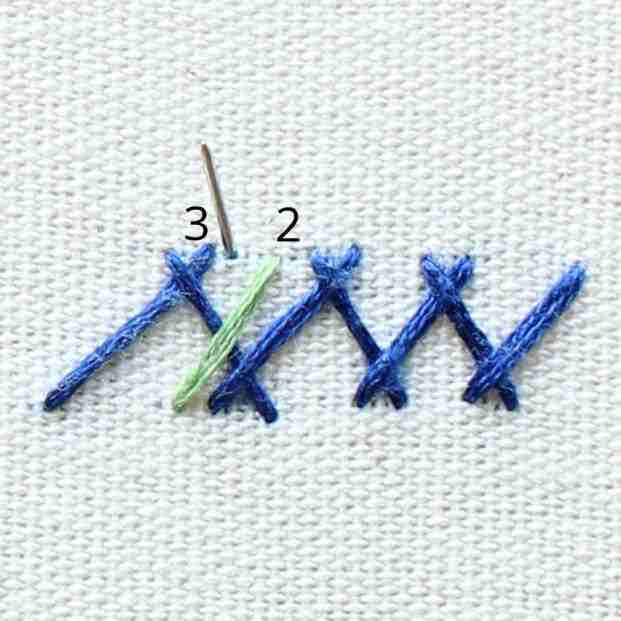 2
Borduur nu een tweede rij flanelsteken kruislings over de eerste rij. We noemen de eerste flanelsteek uit deze rij B.
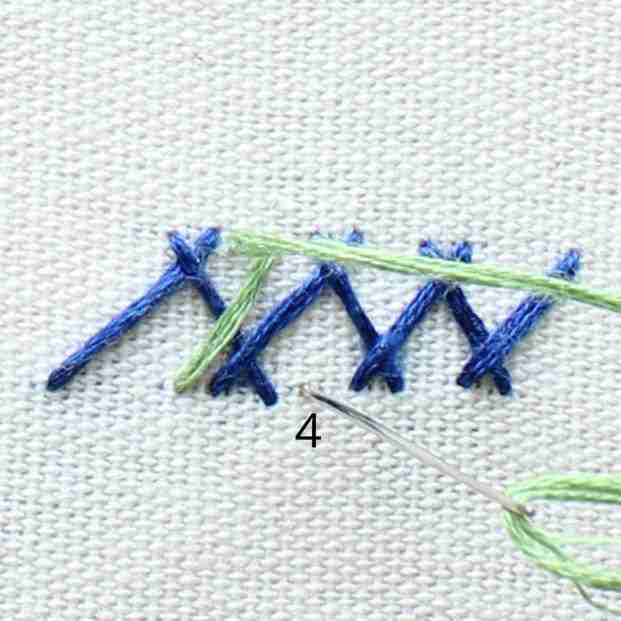 3
B’s eerste lijn begint boven en enkele centimeters verwijderd van A’s eerste lijn.
 4
Borduur B’s eerste lijn diagonaal over A’s eerste lijn.
- 5
Nu maak je B’s tweede lijn. De naald steek je over B’s eerste lijn, en onder A’s tweede lijn.
- 6
Herhaal de laatste vier stappen totdat je A geheel hebt doorkruist met B.
⚠ Common mistakes
- Zorg dat the first layer gelijkmatig is, want the second layer volgt die basis.
- Trek the second layer niet strakker dan the first.
- Controleer with twee colours dat the volgorthe consequandt blijft.
Definition
Double flannel stitch is a variation on flannel stitch in which a second series of crossed stitches lies over or between the first series. Flannel stitch has an open, crossing rhythm. Repeating that movement creates a wider band with more depth and a clearer pattern. The first row is the foundation; the second row makes the crossings fuller and can partly fill the open spaces.
When to use it
Use this stitch for decorative bands, sampler borders, decorative stripes on textiles or an open fill in an elongated area. It works well when ordinary flannel stitch is too narrow or too airy. With two colours, the construction shows up beautifully, for example with a dark foundation and a lighter second layer. For fine work, choose thin thread to keep the pattern open.
Practical tips
Mark two or three guidelines for the height and width of the band. First stitch a short section of the first row and check that the stitch length feels comfortable. Consider using another colour for the second layer; this helps you follow the route. Every so often, work back to the beginning of a repeat to check that the crossing points fall in the same place throughout.
