


Double Blanket Stitch
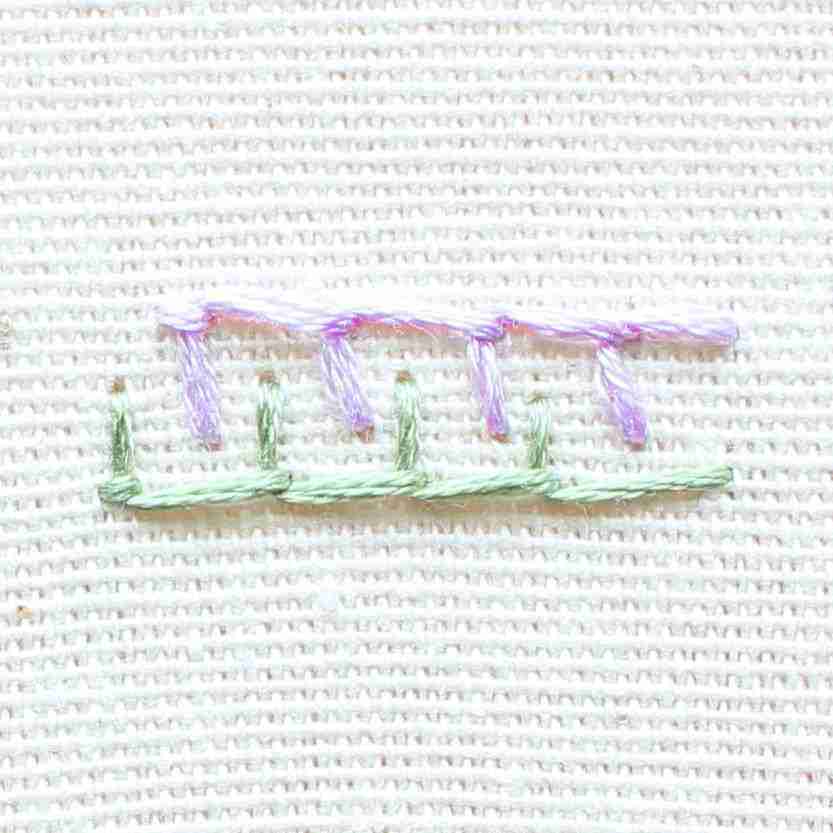
With double blanket stitch, you embroider two rows of blanket stitches opposite one another. The long legs fall between each other, creating an open, rhythmic border pattern.
Hoe maak je deze steek?
 1
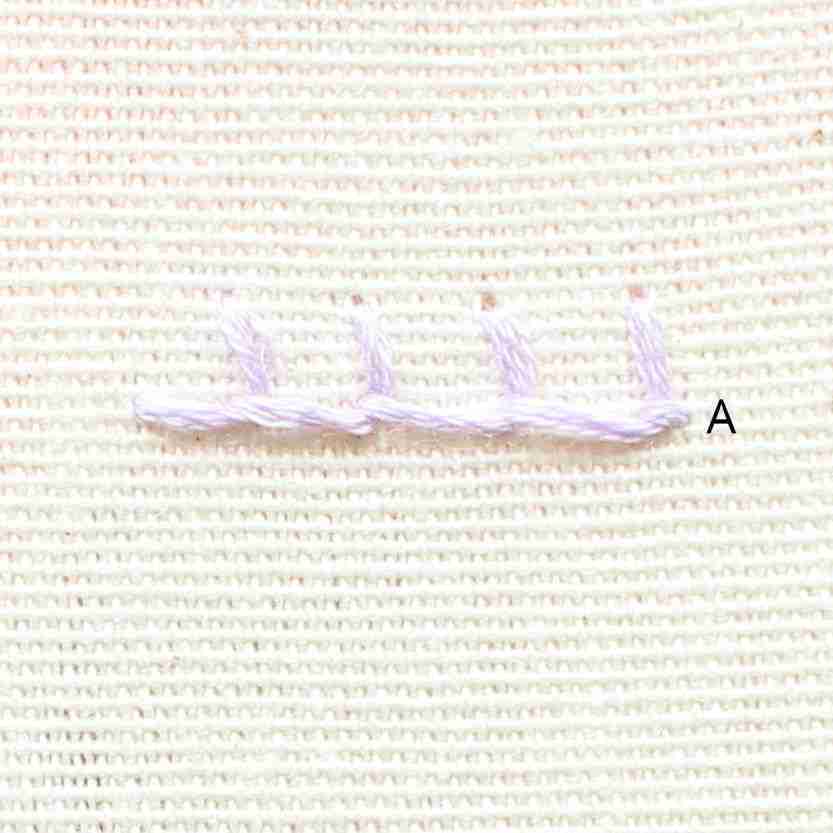
First make a row of blanket stitches. We call this row A. Row A forms a pattern of open squares.
 2
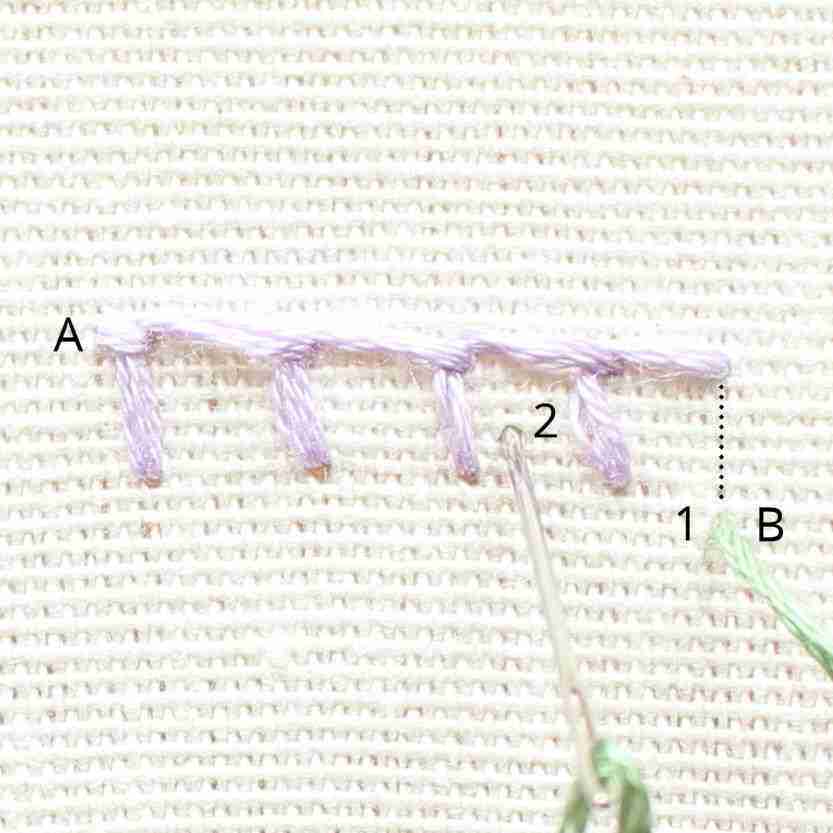
Turn the fabric and make a second row of blanket stitches. We call this row B.
 3
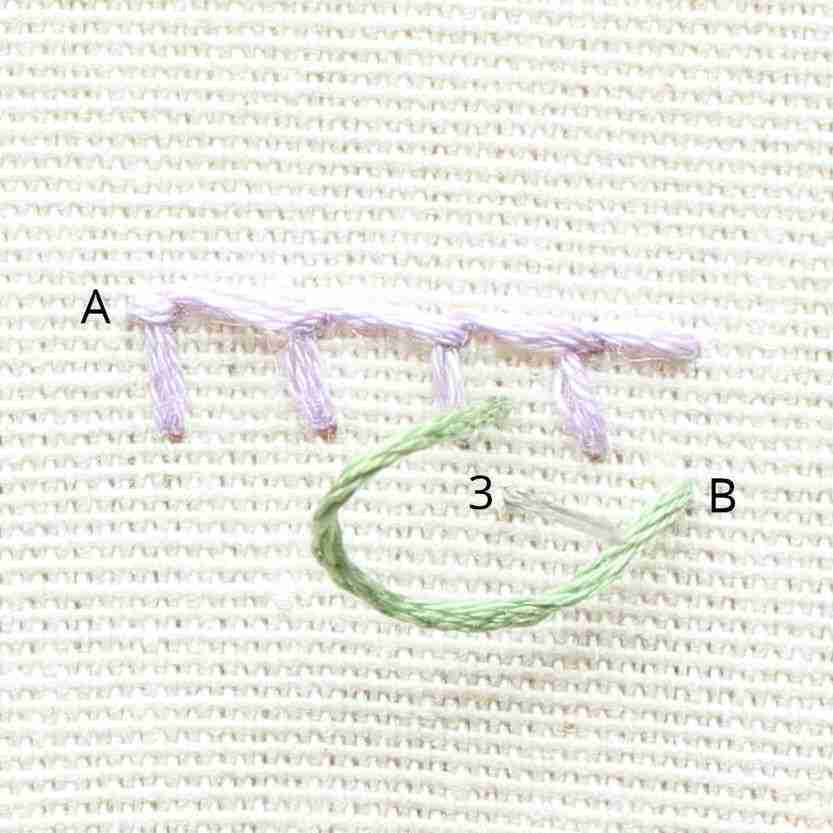
The long vertical legs of B’s blanket stitches lie exactly in the centre of A’s squares. This creates the interrupted effect.
⚠ Common mistakes
- Keep the distance between the two rows even. If the second row shifts, the regular square pattern disappears. Do not pull the thread too tightly.
Definition
Double blanket stitch builds on ordinary blanket stitch, also known as buttonhole stitch. First make a row of loops along a line or border. Then embroider a second row from the other side so that the stitches meet and form small open squares. The result is wider and airier than a single blanket stitch. The two rows give each other rhythm and can form a subtle geometric border.
When to use it
Use double blanket stitch for a decorative border on a cloth, a frame around an appliqué, a band on a bag or a strip in a sampler. It is beautiful when you want structure without a solid filled area. Work in one colour for a calm finish or choose two colours to distinguish the rows clearly.
Practical tips
Draw two parallel guide lines when making a wide border. Work the first row slowly and count the stitches before starting the second. Use slightly shorter stitches on the inside of a curve so the border follows smoothly. Try different distances between the rows on a test piece first to find the opening that best suits your fabric and thread thickness.
