


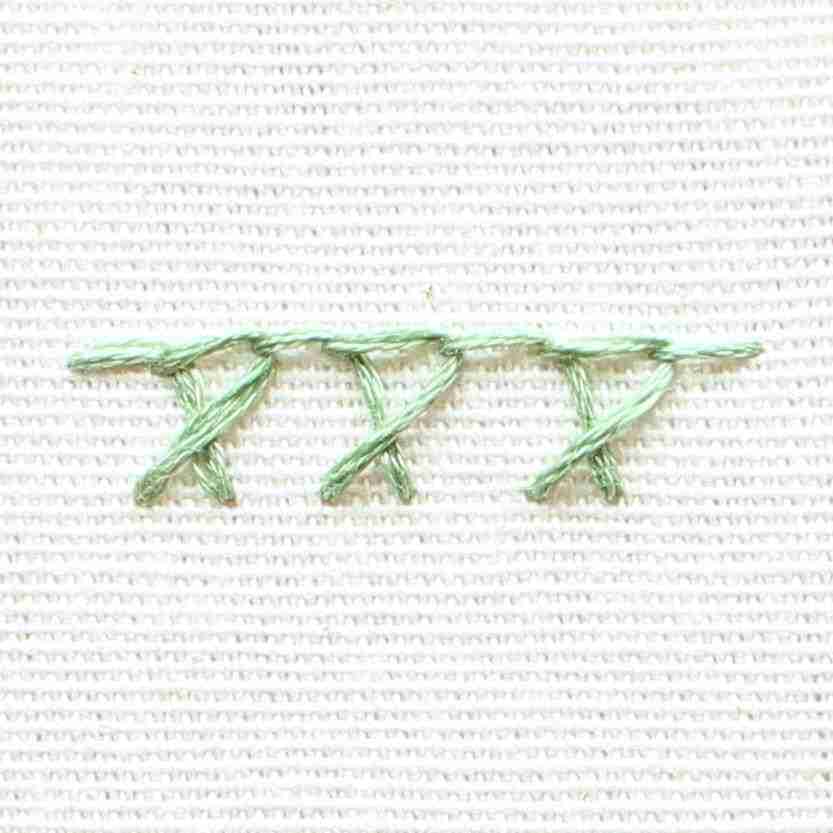
Crossed Blanket Stitch
Crossed blanket stitch is a variation of blanket stitch in which the stitches cross one another. This creates a decorative border with more movement than an ordinary blanket stitch.
Hoe maak je deze steek?
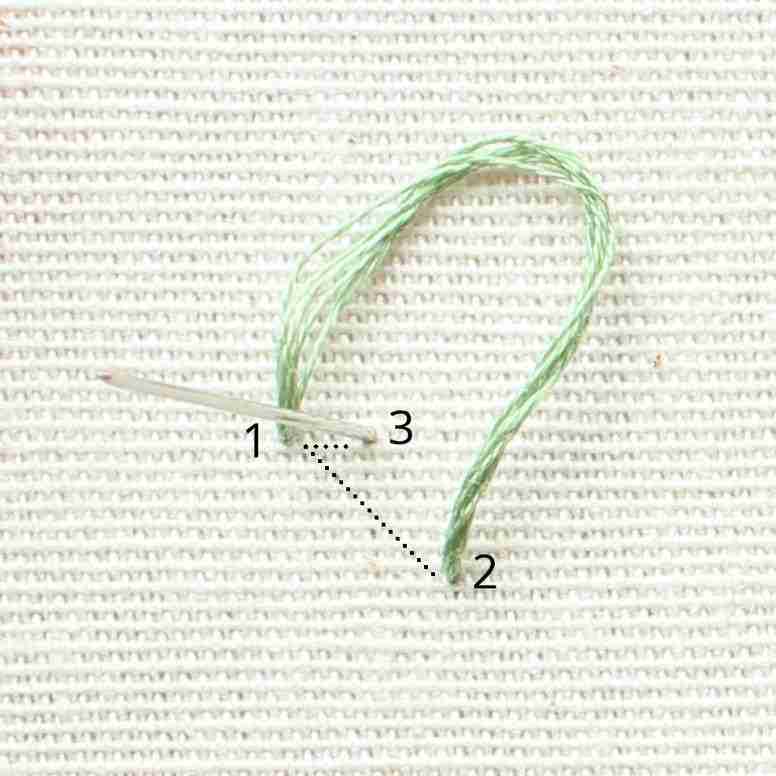 1
Stitch de naald vanonder door punt A.
2Stitch vervolgens de naald door punt B. Deze ligt schuin tegenover A. Trek het draad niet door.
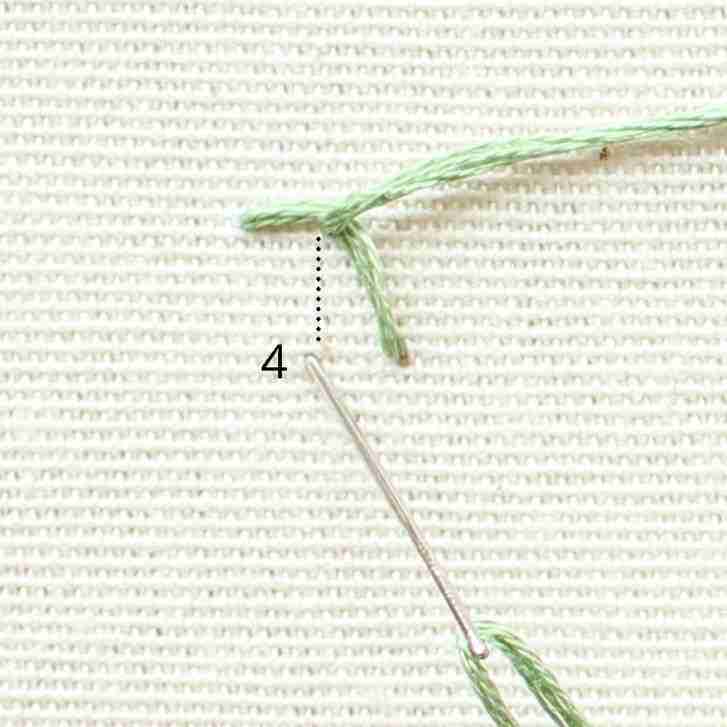 3
Breng de naald omhoog door C, vlak onder A. C vind je schuin tegenover B. Je maakt dus een diagonale lijn. Nu heb je één gesloten dekensteek gemaakt.
4Stitch nu de naald vanaf boven door punt D. Deze ligt links van en enkele millimeters naast B.
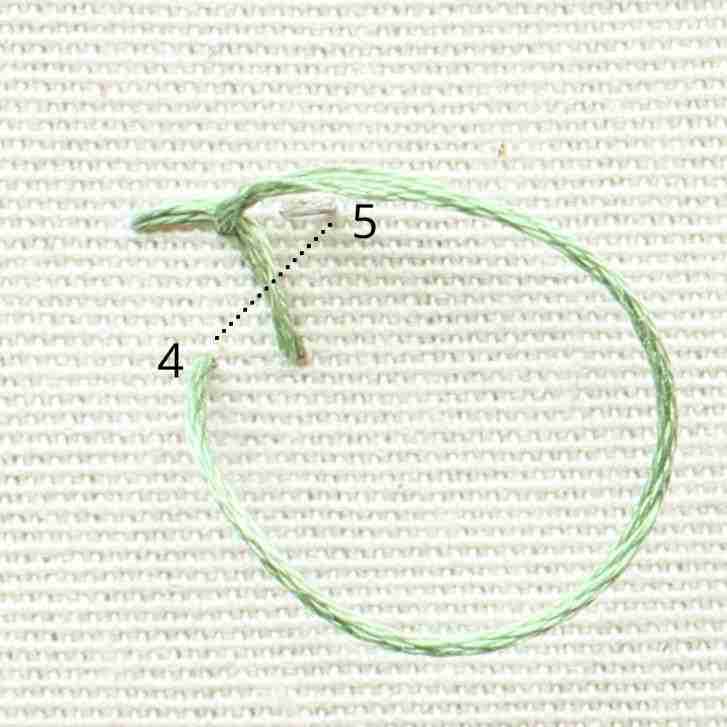 5
Maak nu weer een diagonale lijn, en breng de naald omhoog bij E. Dit punt ligt op dezelfde hoogte als A en C.
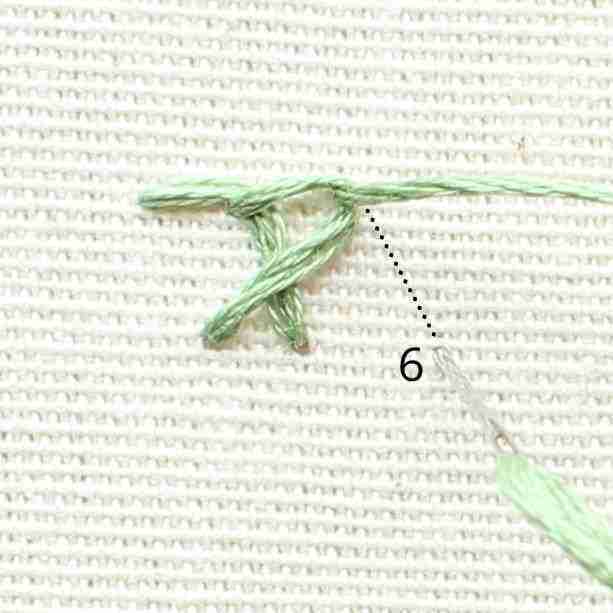
6Nu heb je één gekruist driehoekje af. Begin je met de volgende steek? Stitch dan de naald vanonder door F. Dit punt ligt op dezelfde lijn als B.
 7
Zorg ervoor dat F enkele centimeters verwijderd is van B, zodat de driehoekjes uit elkaar liggen.
8Breng de naald omhoog bij G. Deze ligt schuin tegenover F.
- 9
Nu heb je twee gekruiste dekensteken af! Herhaal dit patroon om hele rij te maken.
⚠ Common mistakes
- Keep the basic spacing even, or the crossings will look uneven.
- Do not pull the thread too tightly when making the crossings.
- Pay attention to the stitch sequence, especially around curves.
Definition
Crossed blanket stitch is a variation on ordinary blanket stitch or buttonhole stitch. Instead of a row of loops all following the same direction, the stitches cross one another in a regular rhythm. This creates a border with more movement and a clear decorative pattern. The loop shape of blanket stitch remains recognisable, but the crossing adds extra depth. The regularity of the entry points determines how calm the border looks.
When to use it
Use crossed blanket stitch along appliques, felt shapes, cloth edges, frames or as a wide decorative border in a sampler. It is suitable when ordinary blanket stitch is too simple and you want a border that forms a motif in its own right. The crossings show up well with contrasting thread. A simple shape, such as a circle or rectangle, is a good place to learn the technique.
Practical tips
Draw a guideline just inside the edge and mark several evenly spaced points for a test piece. Stitch slowly until the sequence of the crossings becomes automatic. Use smooth thread so that you can see clearly where the stitches pass over one another. At corners, an extra small stitch can help with the turn. Check occasionally that the border is still lying flat and that the crosses all face the same direction.
