


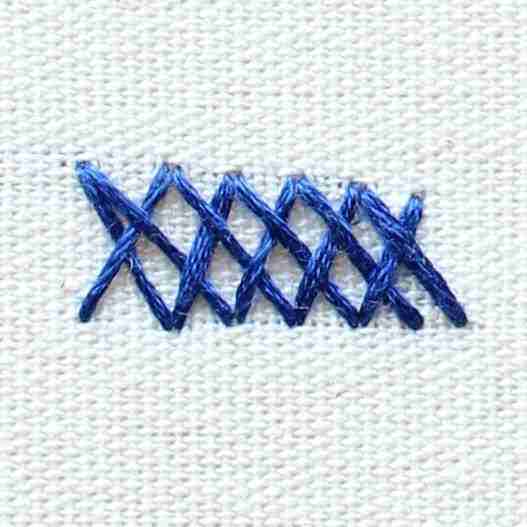
Closed Flannel Stitch
The closed flannel stitch is a compactoo variant of de flannel stitch. Door de stitches thandse and regelmatig too herhaland, ontstaat a ruitachtig patroon dat geschikt is for decorative borders and vulling.
Hoe maak je deze steek?
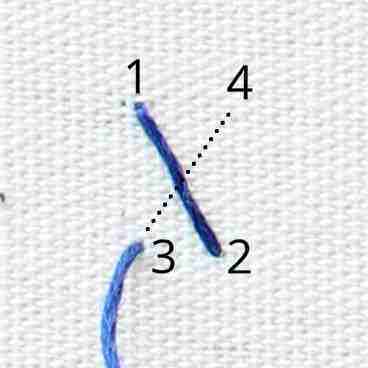 1
Borduur eerst één flanelsteek op de stof.
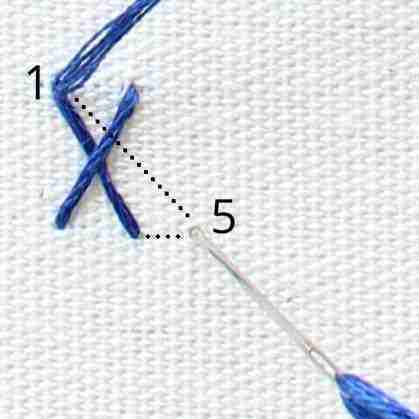 2
Stitch nu de naald door het uiterst rechtse gaatje beneden van de eerste steek. Maak nu de eerste lijn van je tweede flanelsteek.
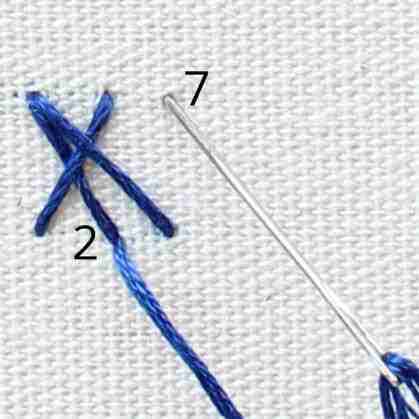 3
Maak nu de tweede lijn. Deze ligt diagonaal over de laatste twee steeklijnen. Zo krijg je de ruitjesvorm.
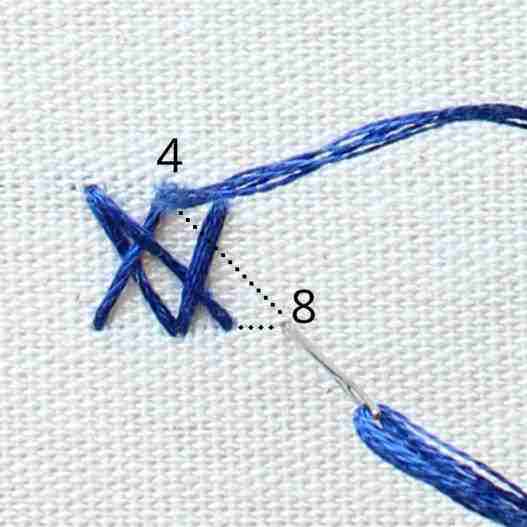 4
Herhaal de laatste twee stappen om een geheel ruitjespatroon te maken.
⚠ Common mistakes
- Houd de rowand and crossings gelijkmatig, anders wordt the diamond pattoorn onrustig.
- Trek de thread not too strak aan with de crossings.
- Gebruik a hulpline if de row snel scheef loont.
Definition
The closed flannel stitch is a flannel stitch in which the repeats are placed closer together than in the ordinary open version. The diagonal stitches cross one another in a compact rhythm and form small diamonds or diagonal squares. This creates more coverage and a fuller pattern while the crossed structure remains visible. The stitch is less airy than the basic flannel stitch, but still decorative and not as solid as a satin-stitch fill.
When to use it
Use this stitch for a narrow decorative band, a frame, a small filled leaf or a geometric accent in a sampler. It is suitable when you want a regular texture without densely stitching an entire area. With two related colours, you can create subtle depth; with a sharp contrasting colour, the diamonds become more graphic. Work on fabric where you can clearly see the distance between the stitch points.
Practical tips
Draw two or three guidelines to keep the height of the band consistent. First practise a short strip and adjust the spacing if necessary before starting on your actual work. Work in the same direction and count the fabric threads whenever possible. Choose thinner thread for fine work and slightly thicker thread for a clearer diamond pattern. Regularly check from a distance that the band remains the same width throughout.
