


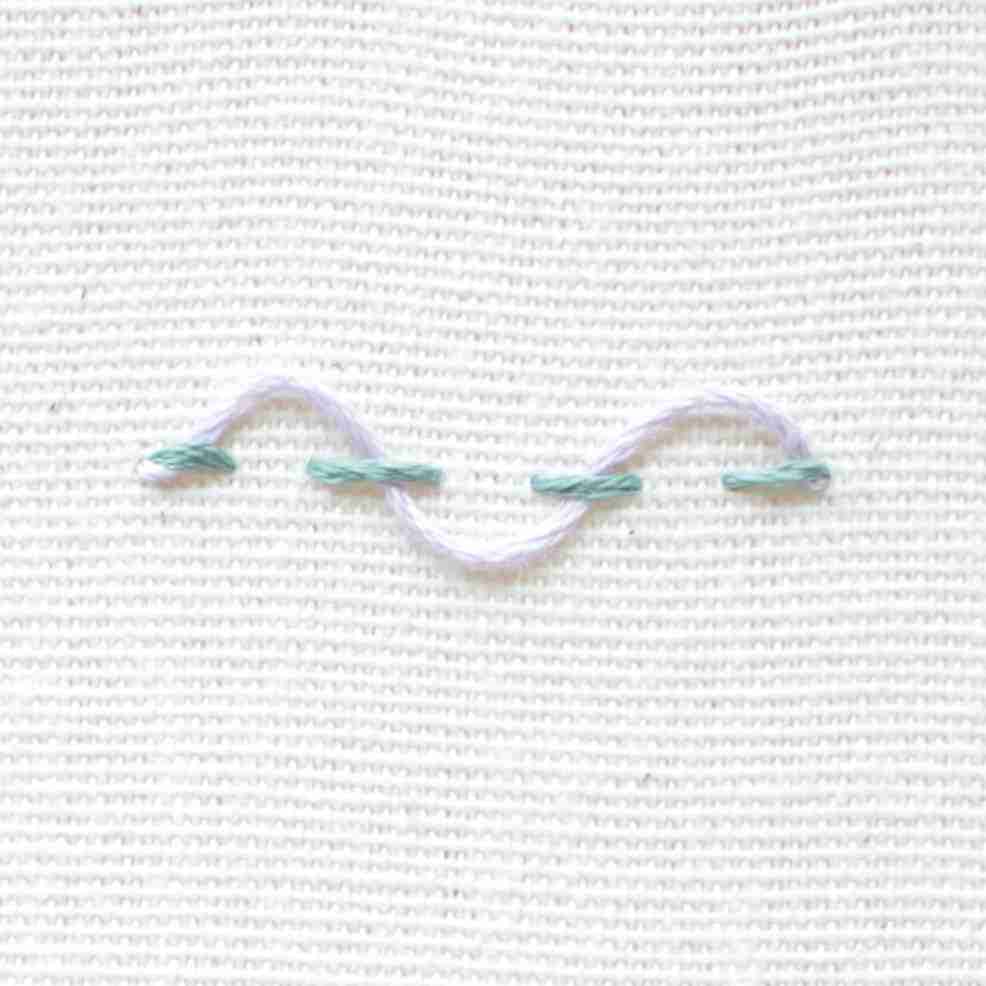
Laced Running Stitch
The intoorlaced running stitch is a decorative variant of de running stitch. Je stitcht eerst a row rowgstitches and leidt daarna a tweede thread through de stitches, without stooeds onnieuw through de fabric too gaan.
Hoe maak je deze steek?
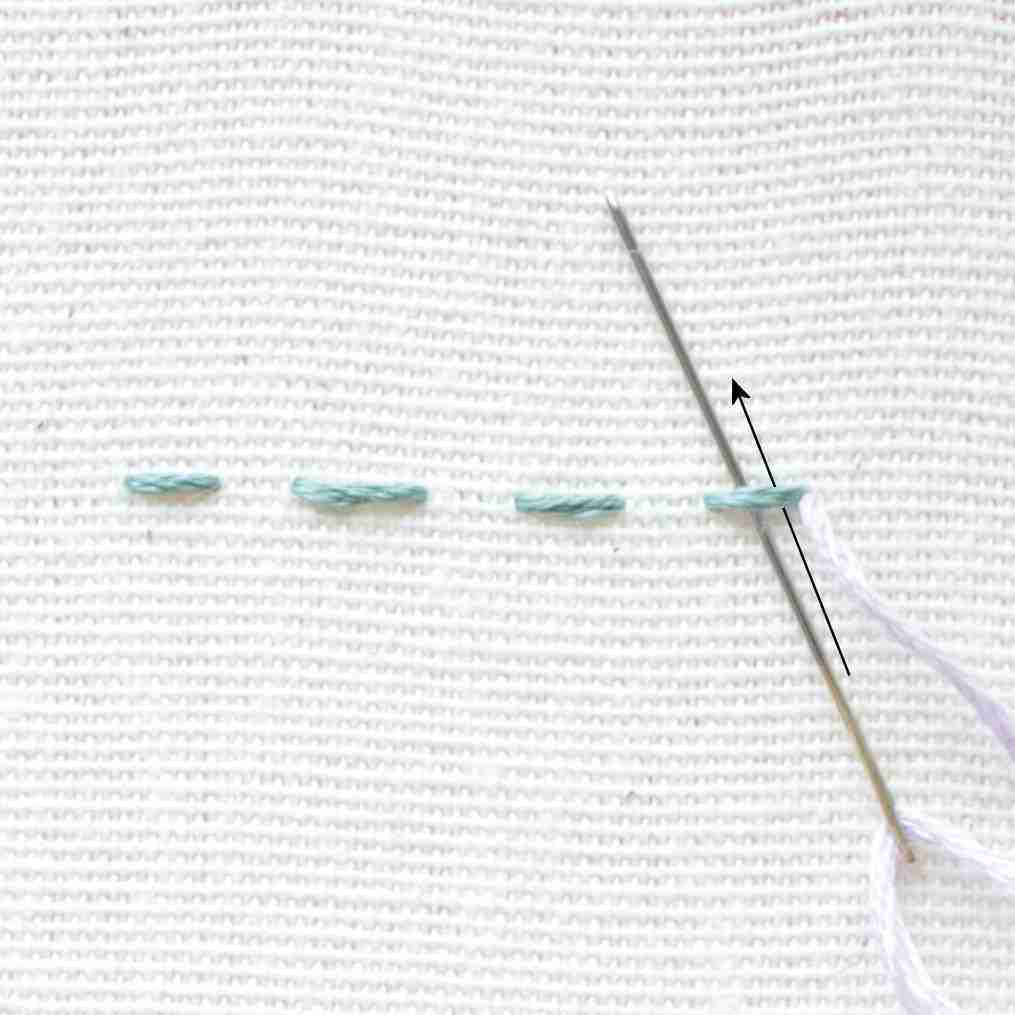 1
First make a row of running stitches.
2Thread your weft thread through a blunt, sturdy needle. A tapestry needle is a good option for this. A needle that is too sharp can make your stitches fray!
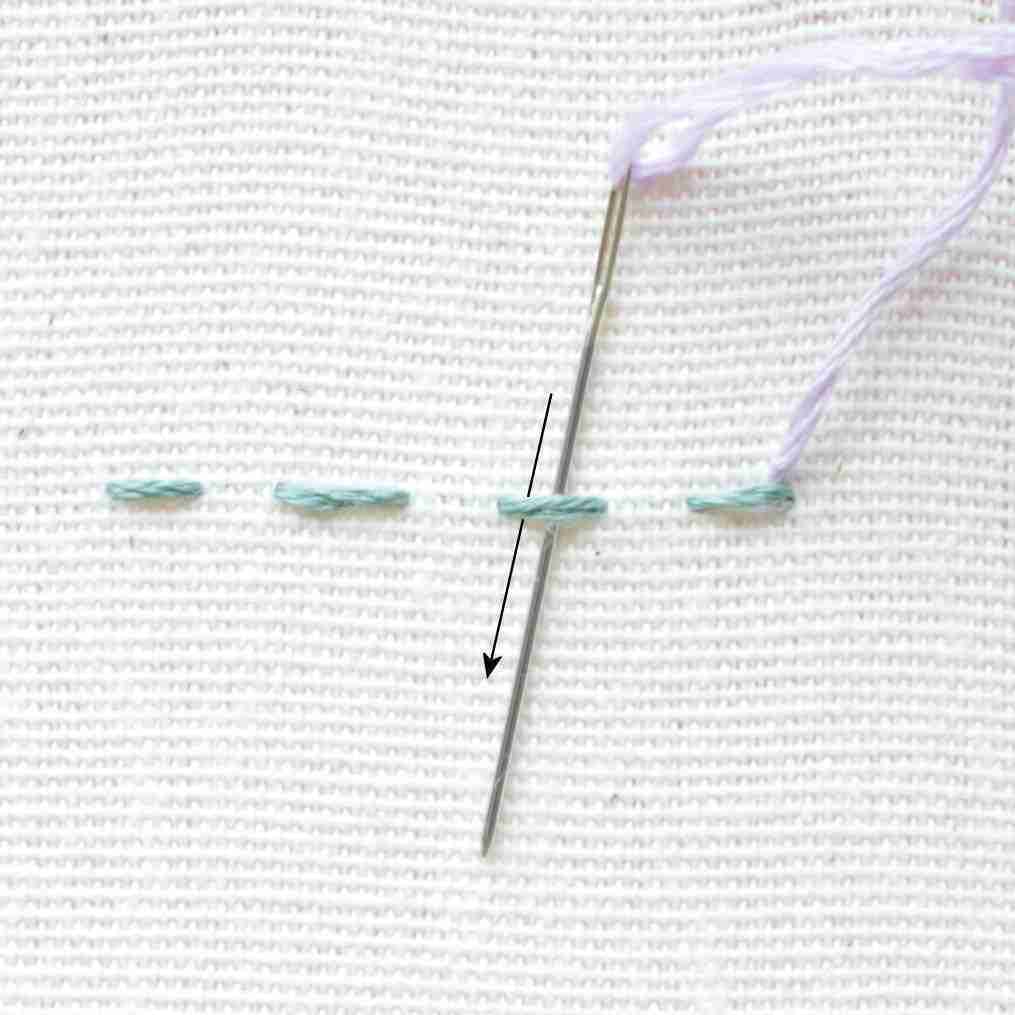 3
Then bring the needle up from behind through the first hole of your first running stitch.
4Bring the needle up, then pass it from above underneath the stitch.
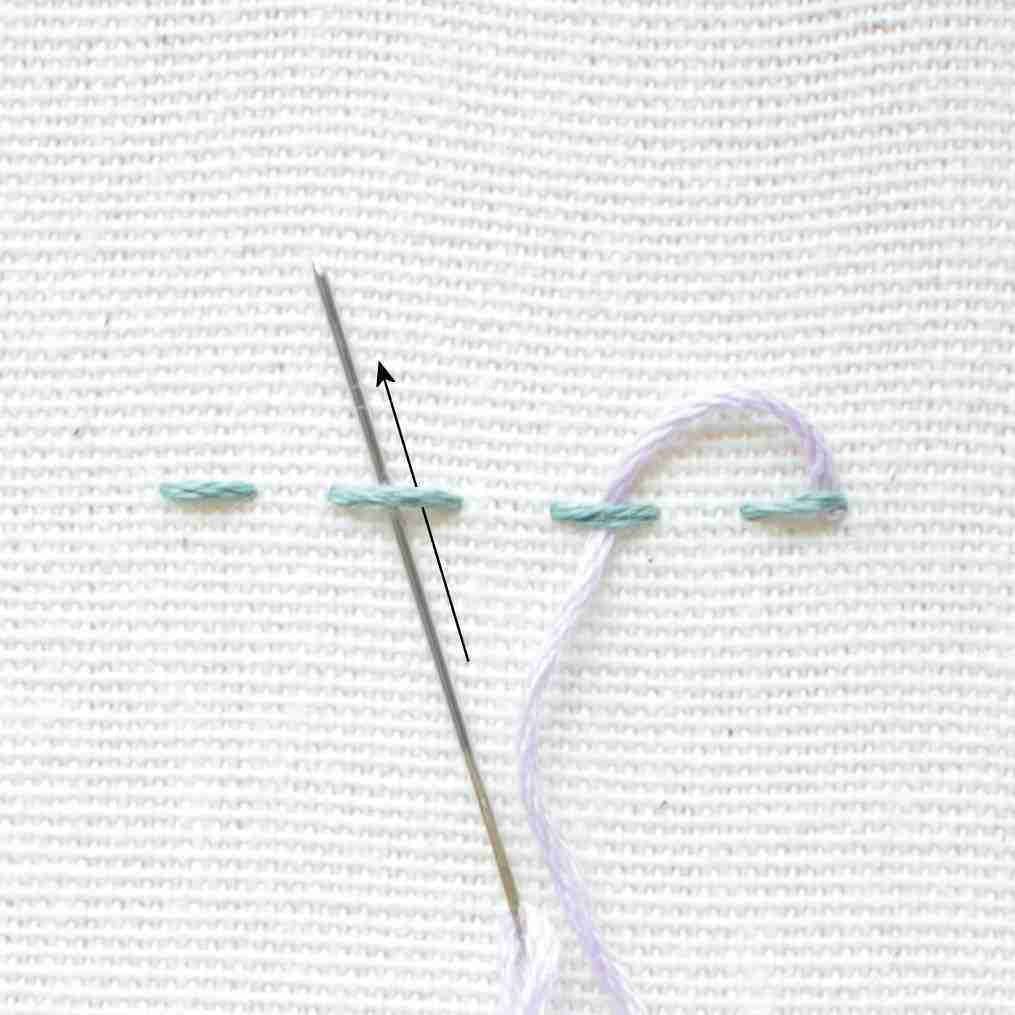 5
Then bring the needle up from below underneath the next stitch.
6Repeat the last two steps until you have finished the entire row of backstitches. Continue stitching from top to bottom, then from bottom to top again, to create a wavy line. In other words, you are working in a zigzag pattern!
⚠ Common mistakes
- Making the base stitches uneven, which makes the threaded strand run irregularly.
- Pulling the second thread too tightly.
- Piercing the fabric while weaving, which interrupts the effect.
Definition
The threaded running stitch begins with an ordinary row of short stitches separated by gaps. A second thread is then guided underneath or through the visible stitches without passing through the fabric at every stitch. The running stitches act as small bridges for the second thread. This creates a decorative, often wavy line with more depth and colour than a simple running stitch.
When to use it
Use this stitch for a border, an elegant outline, a loose stem or a line that deserves more attention. With two colours, you can create a subtle or striking contrast. It works well for samplers, children’s motifs and freehand embroidery patterns. Work on fabric where the base stitches are clearly visible and leave enough space so that the threaded strand does not fill everything in.
Practical tips
First make a row of running stitches with equal stitches and equal spaces between them. For the threaded section, use a blunt needle and slide it underneath the stitches in the same direction each time. Work with short lengths of thread and spread the tension with your finger after a few stitches. Test different colour combinations on a scrap of fabric. A calm contrast shows the decorative weaving most clearly.
