


Material
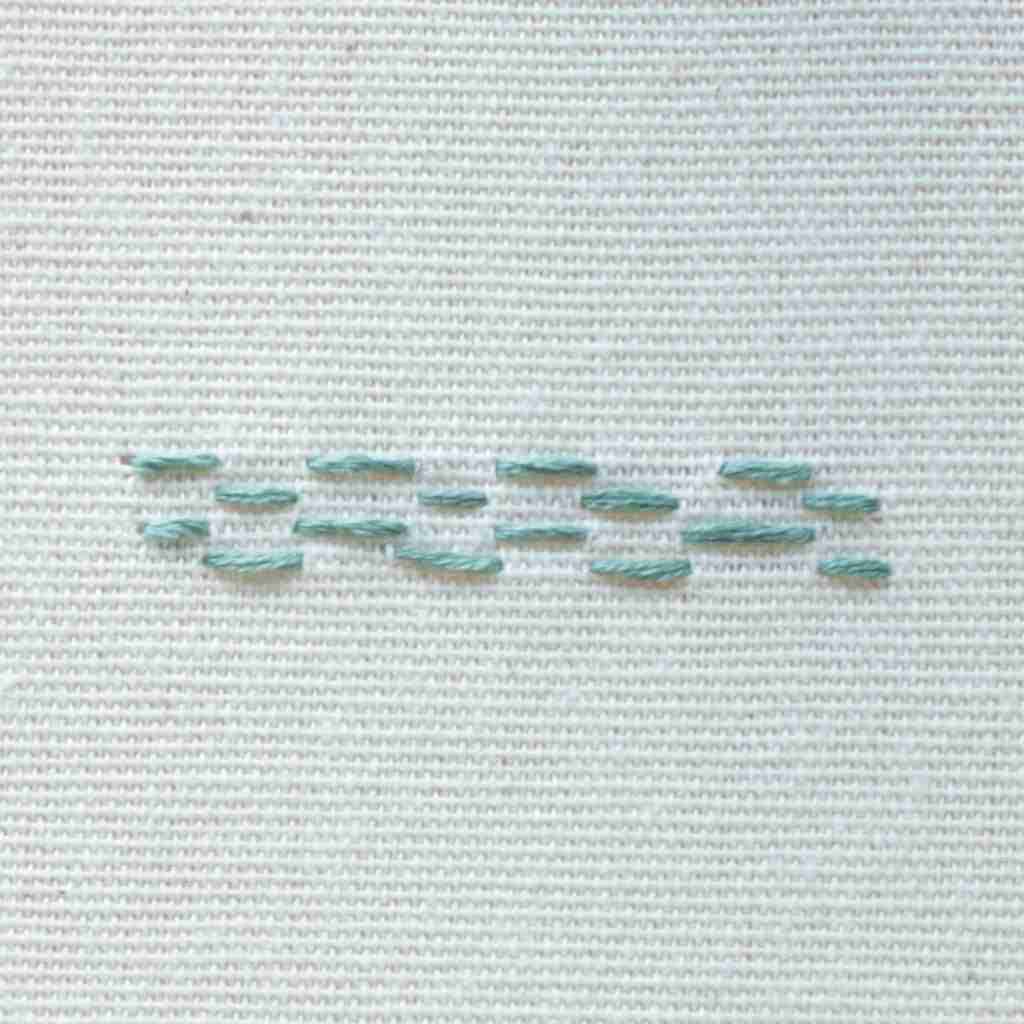
The darning stitch is a stitch in which you meerdere rijen running stitches under elkaar werkt, vaak verspringend. Zo ontstaat a simple pattern dat lijkt on stoppen or on a geweven structuur.
The darning stitch, also known as the mending stitch, consists of straight stitches worked in parallel rows. A second set can cross them at right angles, creating a woven grid. The stitch can be worked closely for a firm fill or more openly for an airy texture. In embroidery it is decorative, but the same technique is also used to repair a worn area in fabric visibly and creatively.
Use the darning stitch for a coloured area, a diamond pattern, a background or visible mending on clothing and textiles. It works well in modern geometric designs and samplers where you want to show texture. Make broad stripes with several rows in one colour, or alternate colours for a woven effect. Choose a sturdy, non-stretch fabric when you want to fill a larger area.
Mark the edges of the area and work all the rows in one direction first. Add the cross-lines afterwards so you can adjust the pattern as you go. Keep the thread tension relaxed and use a hoop or embroidery frame for stability. Try a small test grid with your thread. Count threads on even fabric to keep the spacing consistent, and change colours only at the end of a row.


